
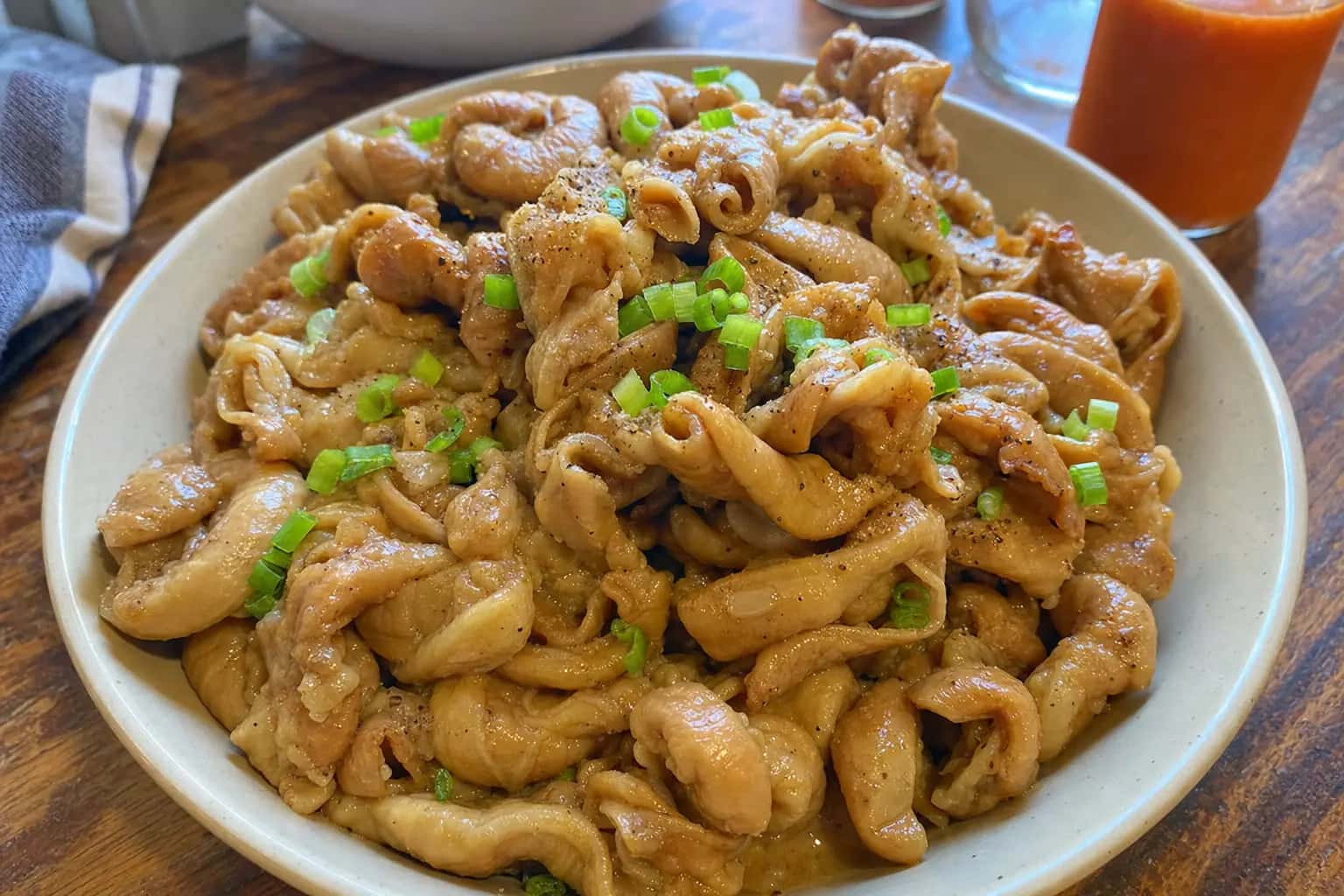
Southern-Style Chitlins
Chitlins, or chitterlings, are a traditional pork dish with deep roots in Southern cooking. This version walks you through careful cleaning, a safety blanch, and a long simmer with onion, garlic, vinegar, and pepper.
- Total time
- 300 min
- Yield
- 6 servings
- Difficulty
- Medium
Prep 60mCook 240mSouthern AmericanMain Course
Chitlins are pork intestines that are cleaned, simmered until tender, and served with a sharp splash of vinegar or hot sauce. They are often cooked for holidays, family gatherings, and Sunday dinners, especially in Southern kitchens.
The main work is cleaning. Even when the package says “pre-cleaned,” you should inspect each piece, remove extra fat and any grit, and keep your work area very clean. This recipe includes a short blanch, which means boiling briefly before the long cook, to help reduce odor and improve food safety.
Plan for a slow afternoon. Chitlins need time to become tender, but the cooking itself is simple once the pot is going.
01What you'll need
Ingredients
12 items · 6 servings
- 4 pounds pre-cleaned raw pork chitterlings, thawed in the refrigerator; after trimming and cooking, expect about 2 pound
- 1 cup distilled white vinegar, divided
- 2 medium yellow onions, quartered
- 4 garlic cloves, smashed
- 2 celery stalks, cut into large pieces
- 1 green bell pepper, seeded and cut into large pieces
- 2 bay leaves
- 1 teaspoon fine salt, plus more to taste
- 1 teaspoon black pepper
- 1/2 teaspoon crushed red pepper flakes, optional
- 2 tablespoons hot sauce, plus more for serving
- Water, as needed
02How to make it
Step-by-step
1. Set up safely
Clear the sink and nearby counter. Keep young children away from the kitchen while you handle raw chitterlings. Wear disposable gloves if you like, and use a cutting board and knife that can be washed well. Have hot, soapy water ready for cleanup.
2. Inspect and trim
Place the thawed chitterlings in a deep bowl or clean sink. Working one piece at a time, look for any grit, dark spots, bits of debris, or thick extra fat. Pull or cut those away. Rinse gently under cool running water, keeping the water low so it does not splash.
3. Blanch the chitlins
Put the cleaned chitterlings in a large pot and cover with fresh water. Add 1/2 cup of the vinegar. Bring to a boil and boil for 5 minutes. Drain carefully, then rinse the pot and the chitterlings. This quick boil helps reduce odor and is an extra safety step.
4. Build the simmering pot
Return the chitterlings to the clean pot. Add the onions, garlic, celery, bell pepper, bay leaves, salt, black pepper, crushed red pepper if using, and enough fresh water to cover by about 1 inch.
5. Simmer until tender
Bring the pot to a boil, then lower the heat so the liquid gently bubbles. Cover partly with a lid and cook for 3 to 4 hours, stirring now and then. Add more hot water if the level drops below the chitterlings.
6. Check the texture
Start checking after 3 hours. The chitlins are done when they are tender enough to cut easily with a fork but not falling apart. If they are still chewy, keep simmering and check every 20 to 30 minutes.
7. Chop and season
Use tongs to move the chitlins to a cutting board. Discard the bay leaves and large vegetable pieces, or keep some onion if you like it. Cut the chitlins into bite-size pieces. Return them to the pot with a little cooking liquid, the remaining 1/2 cup vinegar, and the hot sauce. Taste and add more salt, pepper, or vinegar as needed.
8. Serve hot
Serve the chitlins hot with extra hot sauce. They are often served with cornbread, rice, collard greens, cabbage, or black-eyed peas.
03From our kitchen
Cook's tips
- Make-ahead: Clean and cook the chitlins 1 day ahead. Cool quickly, refrigerate, and reheat gently on the stove with a splash of water or broth.
- Storage: Refrigerate leftovers in a covered container within 2 hours of cooking. Use within 3 to 4 days.
- Freezing: Freeze cooked chitlins in their cooking liquid for up to 2 months. Thaw overnight in the refrigerator before reheating.
- Odor control: Open a window, run the vent fan, and use vinegar in both the blanching water and final seasoning. A long simmer will still have a strong smell, so plan ahead.
- Swaps: White vinegar is classic, but apple cider vinegar also works and tastes a little fruitier. Add a small piece of smoked turkey, smoked ham hock, or a pinch of smoked paprika if you want a smoky note.
- Food safety cleanup: Wash hands, utensils, sink, and counters with hot, soapy water after handling raw chitterlings. Then sanitize surfaces with a kitchen-safe sanitizer or a diluted bleach solution following the product directions.
Cook's note
Nutrition is an estimate based on USDA values for cooked, simmered pork chitterlings and assumes about 2 pounds of edible cooked chitlins from 4 pounds raw pre-cleaned chitterlings after trimming and cooking. Actual values vary because fat and trim loss can differ by package.
04Frequently asked
Questions & answers
Do I really need to clean pre-cleaned chitlins?
Yes. Pre-cleaned chitterlings still need to be checked carefully. Look over every piece and remove any grit, debris, dark spots, and excess fat before cooking.
Why do chitlins smell strong while cooking?
Chitterlings are pork intestines, so they have a natural strong smell. Cleaning well, blanching for 5 minutes, using vinegar, and keeping the kitchen ventilated all help.
How do I know when chitlins are done?
They should be tender and easy to cut with a fork. If they feel rubbery or tough, keep simmering. Most batches take 3 to 4 hours, but some need a little longer.
Can I cook chitlins in a slow cooker?
For food safety and odor control, it is better to clean and blanch them on the stove first. After the 5-minute boil and drain, you can cook them in a slow cooker on high until tender, usually 6 to 8 hours.
Can I reduce the fat?
Yes. Trim off as much visible fat as you can during cleaning. After cooking, you can also chill the cooking liquid and lift off the firm layer of fat before reheating.
05Per serving
Nutrition facts
Nutrition Facts
6 servings
Amount per serving
% Daily Value*
- Total Fat31 g
- 40%
- Saturated Fat10 g
- 50%
- Cholesterol255 mg
- 85%
- Sodium628 mg
- 27%
- Total Carbohydrate6 g
- 2%
- Dietary Fiber1 g
- 4%
- Total Sugars2 g
- Protein19 g
- 38%
- Vitamin D1.7 mcg
- 9%
- Calcium52 mg
- 4%
- Iron2.7 mg
- 15%
- Potassium170 mg
- 4%
* Percent Daily Values are based on a 2,000-calorie diet.
05Keep cooking
You might also like
 Main Course
Chicken Fried Steak
Crisp, peppery cube steak with creamy skillet gravy is a Southern-style dinner that feels generous without needing fancy ingredients. This version keeps the coating sturdy and the steps clear, so you can fry with more 6.
 Main Course
Garlic Butter Steak and Shrimp
This skillet steak and shrimp dinner brings surf-and-turf flavor to the table without a restaurant reservation. A quick garlic butter pan sauce ties the juicy steak and tender shrimp together.
 Main Course
French Onion Pot Roast
This cozy pot roast borrows the deep onion flavor, brothy gravy, and Gruyere-topped toast from French onion soup. It is a slow braise, but the steps are simple and the payoff is a tender roast with a rich onion sauce.
 Main Course
Swedish Meatballs
Tender beef-and-pork meatballs simmer in a creamy brown gravy with a little allspice and nutmeg for classic Swedish flavor. Serve them with mashed potatoes, buttered noodles, or a spoonful of lingonberry jam on the side.