
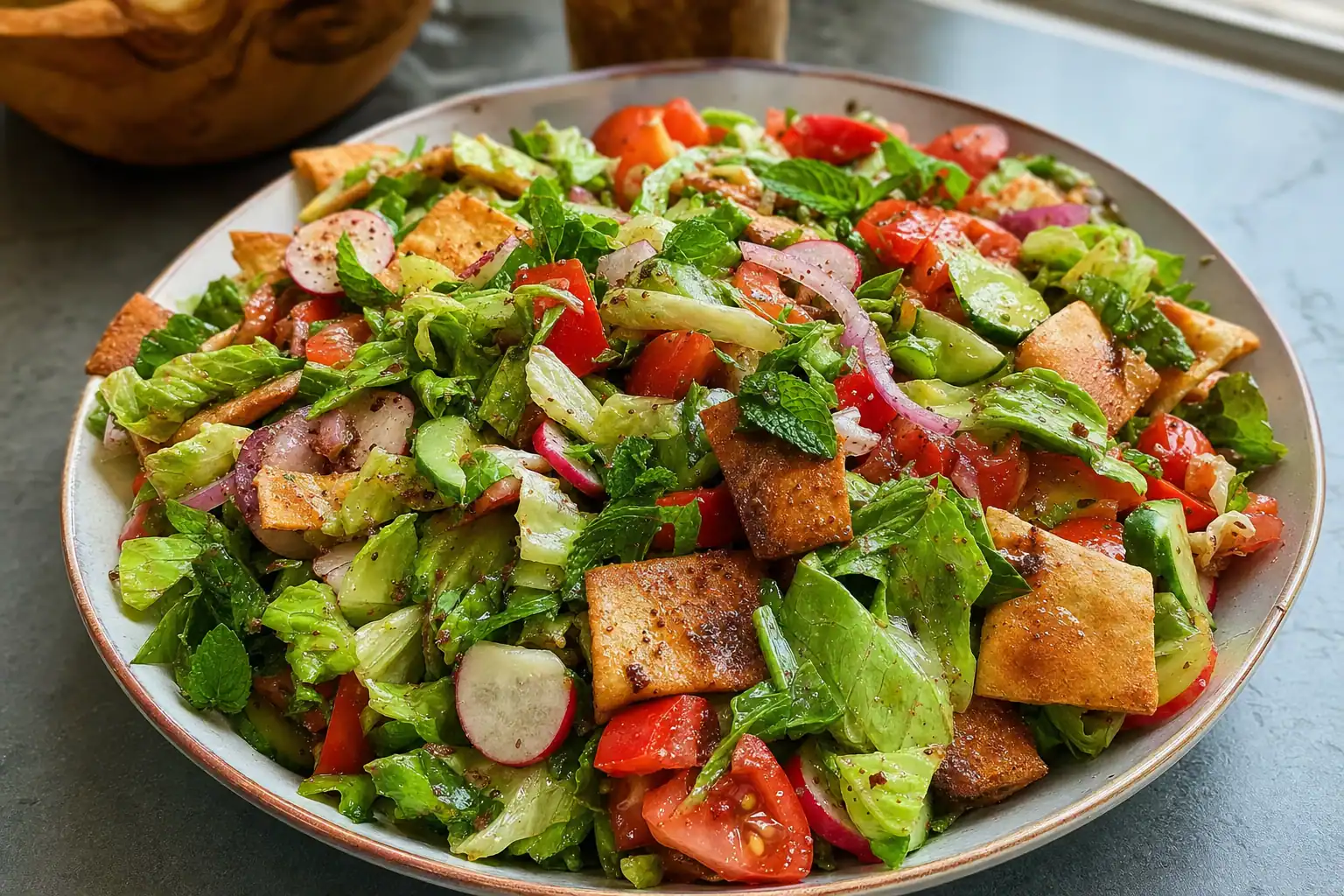
Lebanese Fattoush Salad
Lebanese fattoush is a bright chopped salad with crisp vegetables, herbs, tangy sumac, and crunchy pieces of toasted pita. It is fresh, flexible, and perfect beside grilled meat, fish, falafel, or a simple bowl of lentil
Total
33 min
Servings
4 to 6 servings
Level
Easy
Fattoush is a beloved Lebanese bread salad made with everyday vegetables and pieces of crisp pita. The name comes from the idea of using broken bread, which makes it a smart and delicious way to give day-old pita a second life.
The dressing is what gives fattoush its signature taste. Sumac adds a tart, lemony flavor, while pomegranate molasses brings a sweet-sour depth. Together with lemon juice, olive oil, garlic, and fresh herbs, the salad tastes lively without feeling heavy.
Serve fattoush soon after tossing so the pita stays crunchy in some places and slightly soaked in others. That mix of textures is part of the charm.
01What you'll need
Ingredients
19 items · 4 to 6 servings
- 2 medium pita breads, preferably day-old
- 2 tablespoons olive oil, for the pita
- 1/2 teaspoon ground sumac, for the pita
- 1 large romaine lettuce heart, chopped
- 2 Persian cucumbers or 1/2 English cucumber, chopped
- 2 medium tomatoes, chopped, or 1 1/2 cups cherry tomatoes, halved
- 4 radishes, thinly sliced
- 3 green onions, thinly sliced
- 1 small red bell pepper, chopped
- 1 cup fresh flat-leaf parsley leaves, roughly chopped
- 1/2 cup fresh mint leaves, roughly chopped
- 1 cup purslane leaves, optional
- For the dressing: 1 small garlic clove, finely grated or mashed
- 3 tablespoons fresh lemon juice
- 2 tablespoons pomegranate molasses
- 1 teaspoon ground sumac, plus more to serve
- 1/2 teaspoon fine sea salt, plus more to taste
- 1/4 teaspoon black pepper
- 1/3 cup extra-virgin olive oil
02How to make it
Step-by-step
1. Heat the oven
Preheat the oven to 375°F / 190°C. Line a baking sheet with parchment paper if you want easier cleanup.
2. Toast the pita
Tear or cut the pita into bite-size pieces. Spread them on the baking sheet, drizzle with 2 tablespoons olive oil, and sprinkle with 1/2 teaspoon sumac. Toss with your hands, then bake for 7 to 8 minutes, turning once, until golden and crisp. Let cool.
3. Make the dressing
In a large salad bowl, whisk together the garlic, lemon juice, pomegranate molasses, 1 teaspoon sumac, salt, and black pepper. Slowly whisk in the extra-virgin olive oil until the dressing looks glossy and blended.
4. Chop the vegetables
Chop the romaine, cucumbers, tomatoes, radishes, green onions, and bell pepper into small, easy-to-eat pieces. Fattoush is a chopped salad, so aim for pieces that fit nicely on a fork.
5. Add the herbs
Add the parsley, mint, and purslane, if using, to the bowl with the dressing. Herbs are a main ingredient here, not just a garnish, so use a generous amount.
6. Toss the salad
Add the chopped vegetables to the bowl. Toss well so the dressing coats everything. Taste and add a little more salt, lemon juice, or sumac if the salad needs more brightness.
7. Add the pita
Add most of the toasted pita just before serving and toss gently. Scatter the remaining pita on top so some pieces stay extra crisp.
8. Serve right away
Finish with a small pinch of sumac if you like. Serve the fattoush immediately, while the vegetables are fresh and the pita still has crunch.
03From our kitchen
Cook's tips
- Make-ahead: Chop the vegetables and herbs up to 1 day ahead. Store them in an airtight container in the fridge with a paper towel to absorb extra moisture. Keep the dressing and pita separate until serving.
- Storage: Once dressed, fattoush is best eaten the same day. Leftovers can be refrigerated for up to 24 hours, but the pita will soften. It will still taste good, just less crisp.
- Pita swap: If you do not want to bake the pita, toast it in a dry skillet or air fryer until crisp. You can also use pita chips in a pinch, but choose lightly salted ones so the salad does not become too salty.
- Pomegranate molasses substitute: Use 1 extra tablespoon lemon juice plus 1 teaspoon honey or maple syrup. The flavor will be less deep, but it will still be tangy and balanced.
- Vegetable swaps: Use what is fresh and crisp. Little gem lettuce, iceberg, cherry tomatoes, carrots, or thinly sliced cabbage can all work. Avoid very watery vegetables unless you plan to serve the salad right away.
- Herb tip: If mint tastes strong to you, start with 1/4 cup and add more after tasting. Parsley should still be generous because it gives fattoush its fresh flavor.
Cook's note
Sumac is a deep red spice made from dried berries. It tastes tart and lemony, not hot. Look for it in Middle Eastern markets, spice shops, or the international aisle of larger grocery stores. Pomegranate molasses is a thick, tangy syrup made from reduced pomegranate juice; it keeps well in the pantry after opening, though refrigeration can help preserve its flavor longer.
04Frequently asked
Questions & answers
Can I fry the pita instead of baking it?
Yes. Fry pita pieces in a shallow layer of olive oil or neutral oil until golden, then drain on paper towels. Fried pita is traditional in many homes and has a richer crunch, but baked pita is easier and a little lighter.
What can I use if I cannot find purslane?
You can simply leave it out. Purslane has a juicy, slightly lemony bite, but fattoush is still delicious with romaine, parsley, mint, and the other vegetables.
Why did my fattoush get soggy?
The pita absorbs dressing quickly. Add the toasted pita right before serving, and keep a handful aside for the top. Also make sure washed lettuce and herbs are very dry before tossing.
Is fattoush served as a side or a main dish?
It is usually served as part of a mezze spread or as a side salad. To make it more filling, add chickpeas, grilled chicken, halloumi, or falafel.
Can I make this salad without pomegranate molasses?
Yes. The salad will still work with lemon juice, olive oil, garlic, sumac, salt, and pepper. Add a tiny spoon of honey or maple syrup if you want a touch of sweetness to balance the lemon.
05Keep cooking
You might also like
 Salads & sides
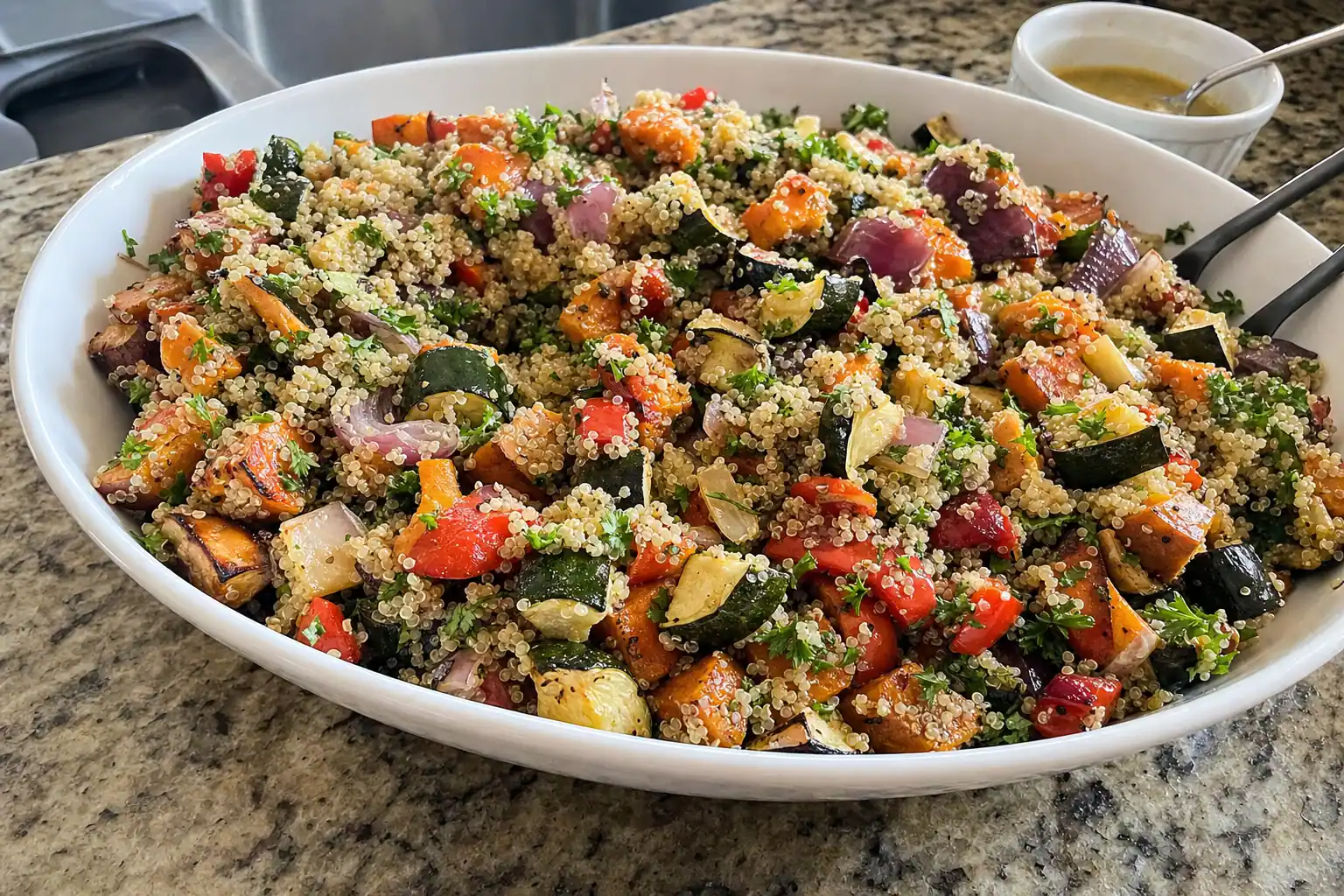
Quinoa and Roasted Vegetable Salad
A hearty and healthy salad that’s perfect for lunch or a light dinner.
 Salads & sides
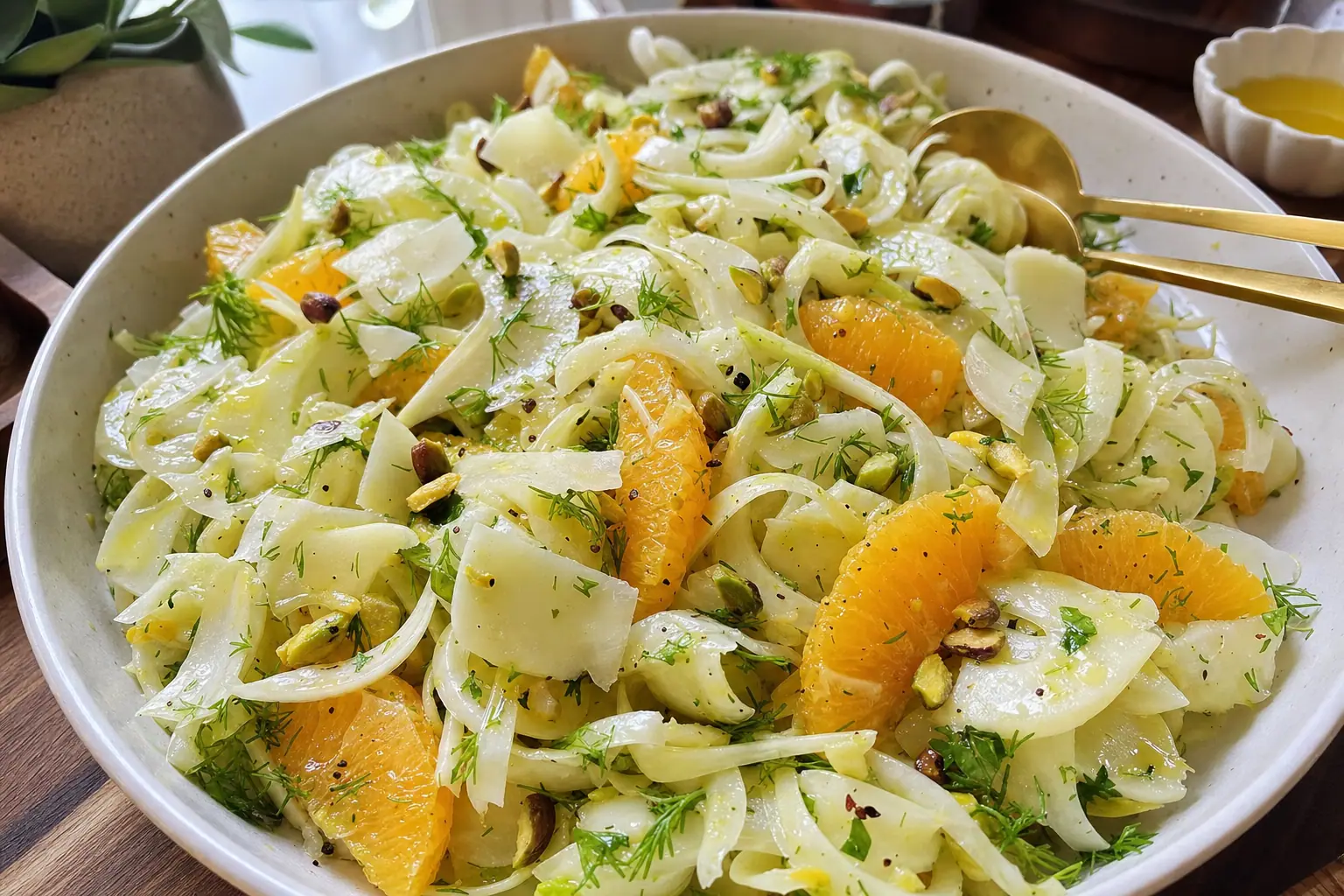
Crisp Fennel Salad with Orange and Lemon Dressing
This fresh fennel salad is crunchy, juicy, and bright, with sweet orange slices, salty Parmesan, and a simple lemon-olive oil dressing. It is a good side for fish, chicken, pasta, or any meal that needs something crisp.
 Salads & sides
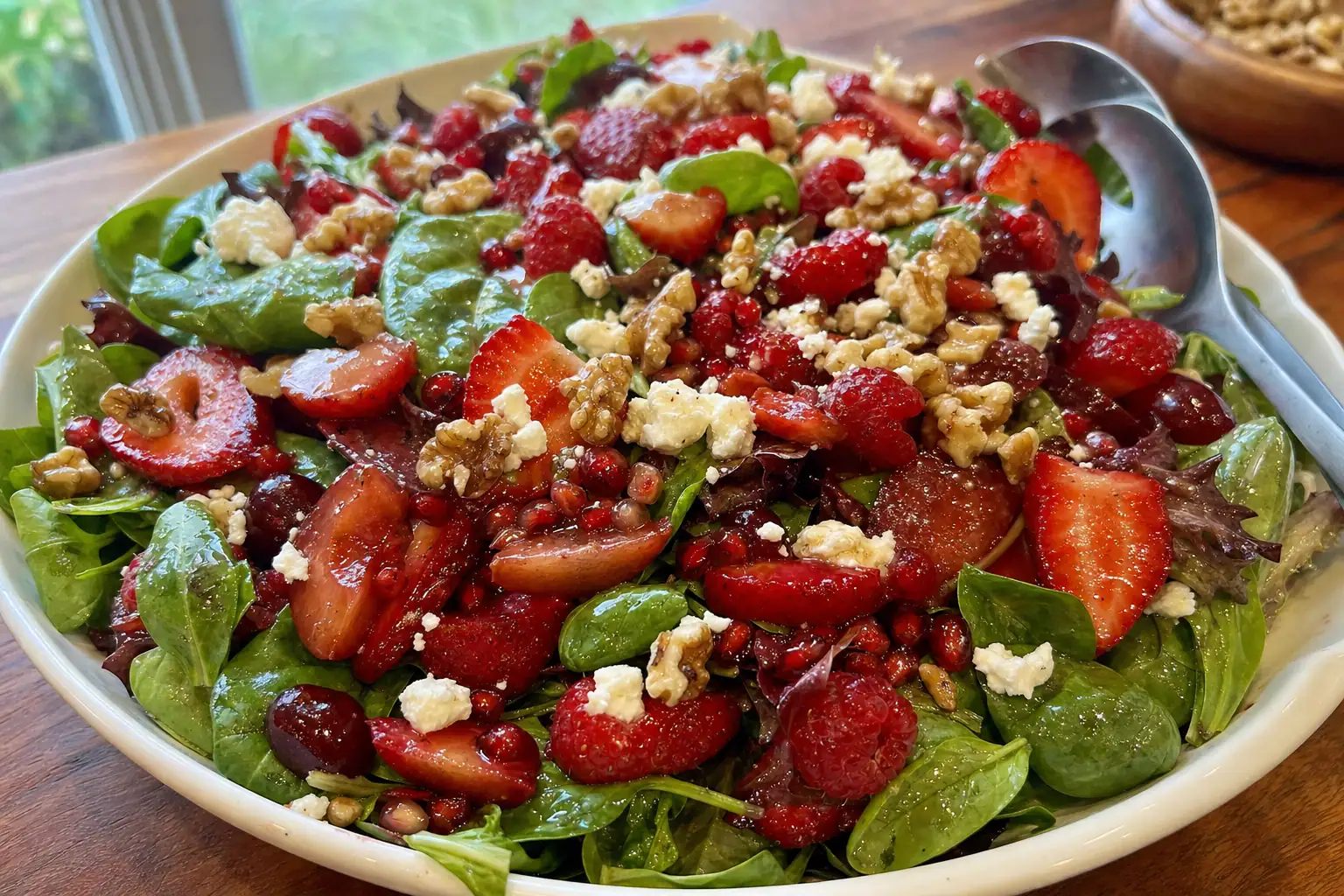
Red Fruit Salad
This bright red fruit salad gathers strawberries, raspberries, cherries, watermelon, and pomegranate in one juicy bowl. A light lime-honey dressing keeps the fruit glossy without covering up its fresh flavor.
 Salads & sides
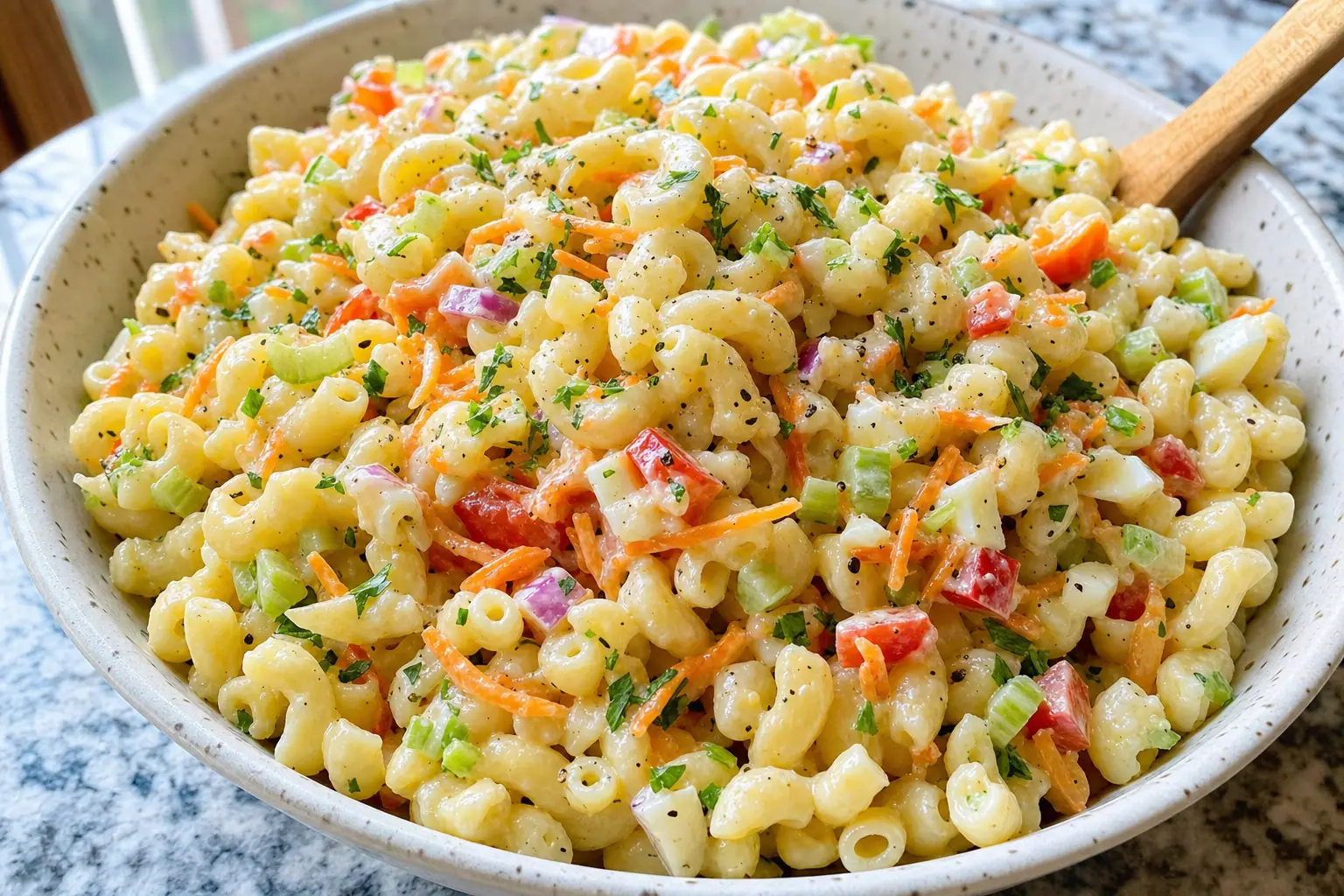
Classic Macaroni Salad
Creamy, tangy, and full of crunch, this macaroni salad is the kind of side dish that fits right in at picnics, cookouts, and easy lunches. A quick rinse after cooking keeps the pasta firm and ready for its simple, mayo-m