
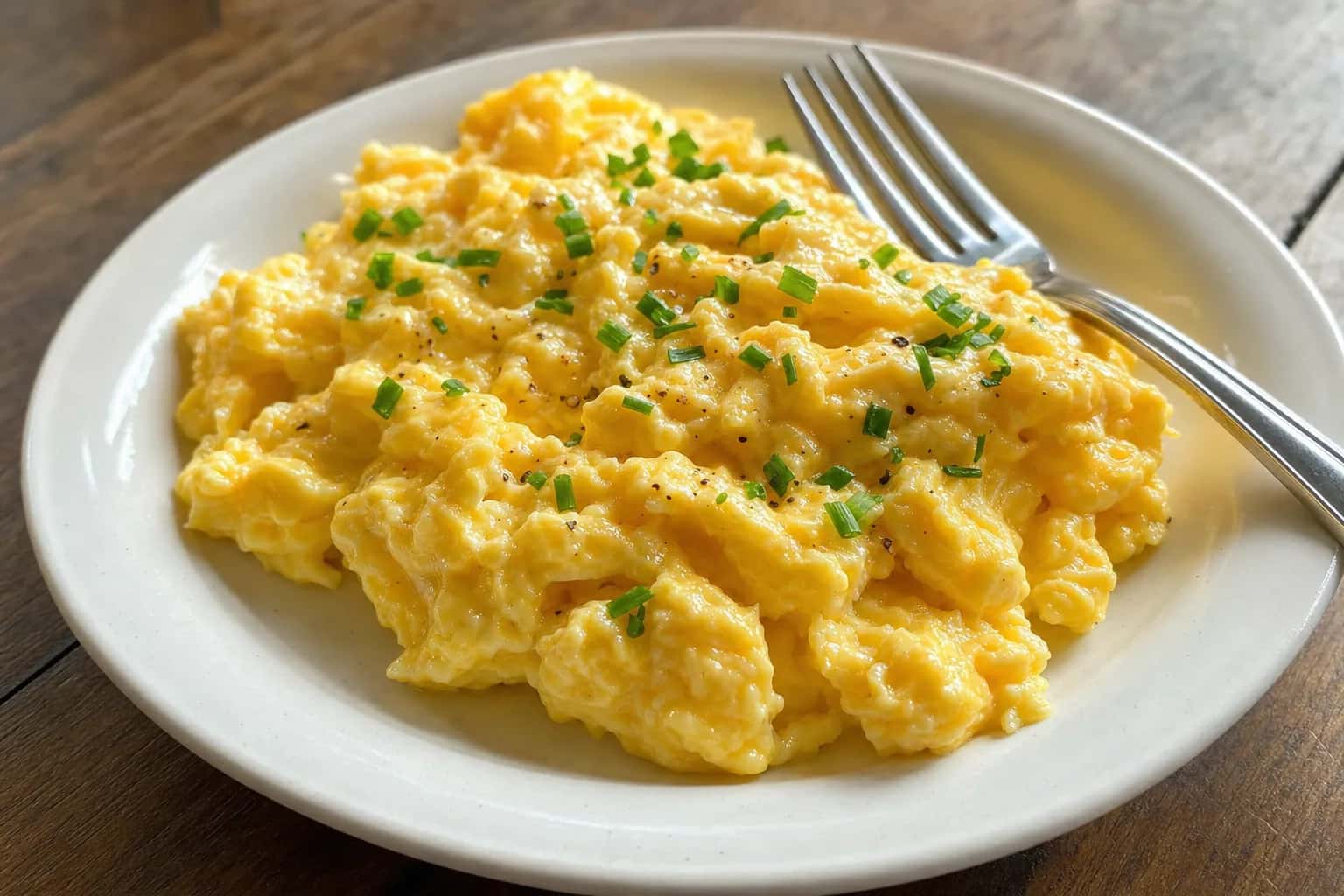
Soft Scrambled Eggs
These simple scrambled eggs are creamy, tender, and ready in about 10 minutes. Low heat and a little patience make all the difference.
- Total time
- 10 min
- Yield
- 2 servings
- Difficulty
- Easy
Prep 5mCook 5mAmericanBreakfast
Scrambled eggs are one of the first stovetop recipes many cooks learn, but small details can change the texture a lot. This version uses low heat, butter, and steady stirring for soft, creamy eggs with small curds.
Curds are the little folds that form as beaten eggs cook. Pulling the pan from the heat while the eggs still look slightly glossy keeps them from turning dry, because they continue to cook for a minute after leaving the stove.
Serve these eggs with toast, fruit, roasted potatoes, or tucked into a breakfast sandwich. The recipe is easy to scale up, as long as you use a wide enough pan and keep the heat gentle.
01What you'll need
Ingredients
6 items · 2 servings
- 4 large eggs
- 2 tablespoons whole milk
- 1/4 teaspoon kosher salt
- Freshly ground black pepper, to taste
- 1 tablespoon unsalted butter
- 1 tablespoon chopped chives or parsley, optional, for serving
02How to make it
Step-by-step
1. Crack the eggs
Crack the eggs into a medium bowl. Check for any bits of shell and remove them with a clean spoon or a larger piece of eggshell.
2. Whisk until smooth
Add the milk, kosher salt, and a little black pepper. Whisk with a fork or whisk until the yolks and whites are fully blended and the mixture looks even yellow.
3. Warm the pan
Place a nonstick skillet over low to medium-low heat. Let it warm for about 1 minute. A gentle pan helps the eggs cook slowly instead of tightening up right away.
4. Melt the butter
Add the butter and swirl it around the pan as it melts. It should foam lightly but not brown. If it starts to sizzle hard, lower the heat.
5. Add the eggs
Pour in the egg mixture. Let it sit undisturbed for about 10 seconds, just until the edges begin to look slightly set.
6. Stir slowly
Use a silicone spatula to push the eggs from the edges toward the center. Keep stirring and folding slowly. Soft curds, or small folds of cooked egg, will begin to form.
7. Take the pan off early
When the eggs are mostly set but still look glossy and a little loose, remove the pan from the heat. The leftover heat in the pan will finish cooking them.
8. Serve right away
Give the eggs one final gentle fold. Taste and add a pinch more salt or pepper if needed. Sprinkle with chives or parsley, if using, and serve warm.
03From our kitchen
Cook's tips
- For creamier eggs, keep the heat low and stir often. High heat cooks eggs fast but can make them rubbery.
- For firmer eggs, cook for 30 to 60 seconds longer, stirring often, until no liquid egg remains. This is a good choice for young children, older adults, pregnant people, or anyone avoiding undercooked eggs.
- You can swap the milk for half-and-half for a richer texture, or use water for a lighter scramble. Unsweetened dairy-free milk also works, but choose one with a neutral flavor.
- Make-ahead note: scrambled eggs are best fresh. If you need to make them ahead, slightly undercook them, cool quickly, and refrigerate in an airtight container for up to 3 days.
- To reheat, warm gently in a skillet over low heat or microwave in 15-second bursts, stirring between bursts. Stop as soon as the eggs are hot to avoid drying them out.
- For add-ins like shredded cheese, cooked vegetables, or ham, stir them in when the eggs are halfway set. Raw vegetables should be cooked first so they do not water down the eggs.
Cook's note
A nonstick skillet makes this recipe easier, especially for beginners. If using stainless steel or cast iron, preheat gently and use enough butter to coat the surface well before adding the eggs.
04Frequently asked
Questions & answers
Should I add milk to scrambled eggs?
Milk is optional. A small amount helps loosen the eggs and gives a softer texture. Too much milk can make scrambled eggs watery, so keep it to about 1 tablespoon per 2 eggs.
Why are my scrambled eggs watery?
They may be undercooked, cooked over heat that is too high, or mixed with too much liquid. Cook over low to medium-low heat and stop when the eggs are softly set, not runny.
Can I make scrambled eggs without butter?
Yes. Use olive oil or another cooking oil instead. Butter adds flavor and helps the eggs feel creamy, but oil works well for cooking and prevents sticking.
How do I keep scrambled eggs from sticking?
Use a nonstick pan, keep the heat low, and let the butter coat the pan before adding the eggs. Stir with a silicone spatula so you can gently sweep the eggs from the bottom and sides.
Can I double this recipe?
Yes. Use 8 eggs, 1/4 cup milk, 1/2 teaspoon kosher salt, and 2 tablespoons butter for 4 servings. Use a larger skillet so the eggs cook evenly, and expect the cook time to increase by a few minutes.
05Per serving
Nutrition facts
Nutrition Facts
2 servings
Amount per serving
% Daily Value*
- Total Fat16 g
- 21%
- Saturated Fat7 g
- 35%
- Cholesterol389 mg
- 130%
- Sodium437 mg
- 19%
- Total Carbohydrate1 g
- 0%
- Dietary Fiber0 g
- 0%
- Total Sugars1 g
- Protein13 g
- 26%
- Vitamin D2.4 mcg
- 12%
- Calcium75 mg
- 6%
- Iron1.8 mg
- 10%
- Potassium160 mg
- 3%
* Percent Daily Values are based on a 2,000-calorie diet.
05Keep cooking
You might also like
 Breakfast
Scrambled Eggs with Cream Cheese
Soft scrambled eggs meet little pockets of tangy cream cheese in this quick breakfast. Cook them low and slow for creamy eggs that feel special but take less than 15 minutes.
 Breakfast
Over Easy Eggs
Over easy eggs are all about a set white and a warm, runny yolk. A gentle pan, a little butter, and one confident flip get you there.
 Breakfast
Simple Muffins
These tender, plain muffins are easy to mix by hand and ready in about 30 minutes. Keep them classic with vanilla, or fold in berries, chocolate chips, or chopped nuts.
 Breakfast
Baked Donut Recipe
These soft baked donuts are made in a donut pan, so there is no frying oil to manage. A quick vanilla glaze gives them the classic donut-shop finish at home.