
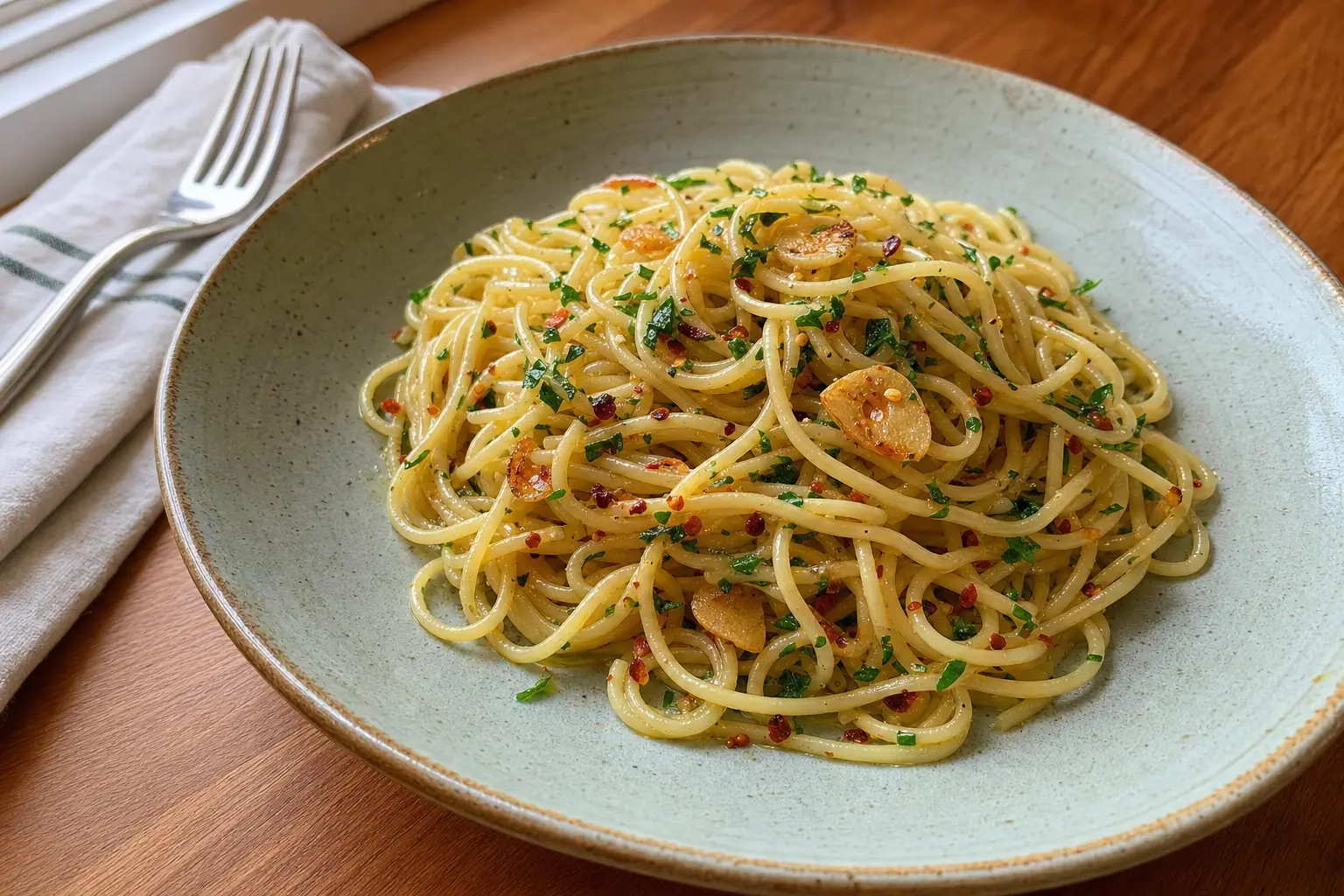
Spaghetti Aglio e Olio
Aglio e olio is a simple Italian pasta made with garlic, olive oil, chile, and parsley. The trick is gentle heat and a splash of starchy pasta water to turn a few pantry ingredients into a glossy sauce.
Total
25 min
Servings
4 servings
Level
Easy
Spaghetti aglio e olio means “spaghetti with garlic and oil” in Italian. It comes from Naples and is the kind of dish you can make when the fridge looks bare but the pantry can still help.
There are only a few ingredients, so the method matters. Cook the garlic slowly so it turns fragrant but not bitter, then use pasta water to help the olive oil cling to the noodles.
This recipe is quick enough for a weeknight and flexible enough for a late-night meal. Add more chile if you like heat, or finish with lemon zest for a brighter plate.
01What you'll need
Ingredients
9 items · 4 servings
- 12 ounces spaghetti
- Kosher salt, for the pasta water
- 1/2 cup extra-virgin olive oil
- 6 large garlic cloves, thinly sliced
- 1/2 teaspoon red pepper flakes, plus more to taste
- 1/2 cup chopped fresh flat-leaf parsley
- 1/2 teaspoon freshly ground black pepper
- Optional: 1 teaspoon finely grated lemon zest
- Optional: grated Parmesan or Pecorino Romano, for serving
02How to make it
Step-by-step
1. Boil the pasta water
Bring a large pot of water to a boil. Salt it well; it should taste pleasantly salty, like a mild broth. This is your main chance to season the pasta from the inside.
2. Cook the spaghetti
Add the spaghetti and cook until just shy of al dente, which means tender but still a little firm in the center. Check the package time and start tasting 1 to 2 minutes early.
3. Save pasta water
Before draining, scoop out at least 1 cup of the starchy cooking water. The starch helps the oil and water come together into a light sauce. Drain the pasta, but do not rinse it.
4. Warm the oil and garlic
While the pasta cooks, add the olive oil and sliced garlic to a large skillet. Set it over medium-low heat. Cook gently for 3 to 5 minutes, stirring often, until the garlic is pale golden at the edges and smells sweet.
5. Add the chile
Stir in the red pepper flakes and cook for about 20 seconds. Keep the heat low. If the garlic turns dark brown, it can taste bitter, so pull the pan off the heat for a moment if it is cooking too fast.
6. Toss the pasta
Add the drained spaghetti to the skillet. Pour in 1/2 cup reserved pasta water and toss with tongs over medium heat until the noodles look shiny and coated. Add more pasta water, a splash at a time, if the pasta seems dry.
7. Finish with herbs
Turn off the heat. Add the parsley, black pepper, and lemon zest if using. Toss again. Taste and add more salt, chile flakes, or pasta water as needed.
8. Serve right away
Divide the pasta among warm bowls. Serve as is, or add a small shower of Parmesan or Pecorino Romano if you like. Aglio e olio is at its glossiest right after it is tossed.
03From our kitchen
Cook's tips
- Make-ahead: Aglio e olio is best made just before eating. You can slice the garlic and chop the parsley a few hours ahead. Keep the garlic covered in the fridge and the parsley wrapped in a slightly damp paper towel.
- Storage: Refrigerate leftovers in an airtight container for up to 3 days. The pasta will absorb the sauce as it sits, so it may not be as silky the next day.
- Reheating: Warm leftovers in a skillet over low heat with a splash of water. Toss until loosened and hot. Avoid microwaving for too long, which can make the garlic taste harsh and the pasta rubbery.
- Garlic swap: Thin slices give classic flavor and texture. Minced garlic works, but it cooks faster and can burn quickly. If using minced garlic, lower the heat and watch it closely.
- Pasta swap: Spaghetti is traditional, but linguine, bucatini, fettuccine, or even short pasta like rigatoni can work. Use what you have and save extra pasta water to help coat different shapes.
- Heat level: Red pepper flakes vary in strength. Start with 1/4 teaspoon for mild pasta, 1/2 teaspoon for medium heat, or 1 teaspoon for a spicier version.
Cook's note
Use an olive oil you enjoy tasting, because it is a main ingredient here. It does not need to be expensive, but it should smell fresh and fruity, not stale or waxy. If your garlic begins to brown too much before the pasta is ready, remove the skillet from the heat and let the oil cool slightly.
04Frequently asked
Questions & answers
Can I make aglio e olio without parsley?
Yes. Parsley adds freshness and color, but the pasta will still work without it. You can use a little basil, chives, or lemon zest instead, or leave the herbs out.
Why is my aglio e olio oily instead of saucy?
It likely needs more starchy pasta water and more tossing. Add pasta water a few tablespoons at a time over medium heat and toss until the oil lightly coats the noodles instead of pooling in the pan.
Can I add protein to this pasta?
Yes. Shrimp, canned tuna, grilled chicken, or white beans all work. Cook the protein separately or warm it gently in the garlic oil before adding the pasta.
Should I add cheese to aglio e olio?
Traditional versions often skip cheese, but many home cooks enjoy it. If you add Parmesan or Pecorino, use a small amount and add it off the heat so it does not clump.
What should I do if the garlic burns?
Burned garlic tastes bitter, and it can affect the whole dish. It is better to start over with fresh oil and garlic. Cook it slowly over medium-low heat next time.
05Keep cooking
You might also like
 Dinner
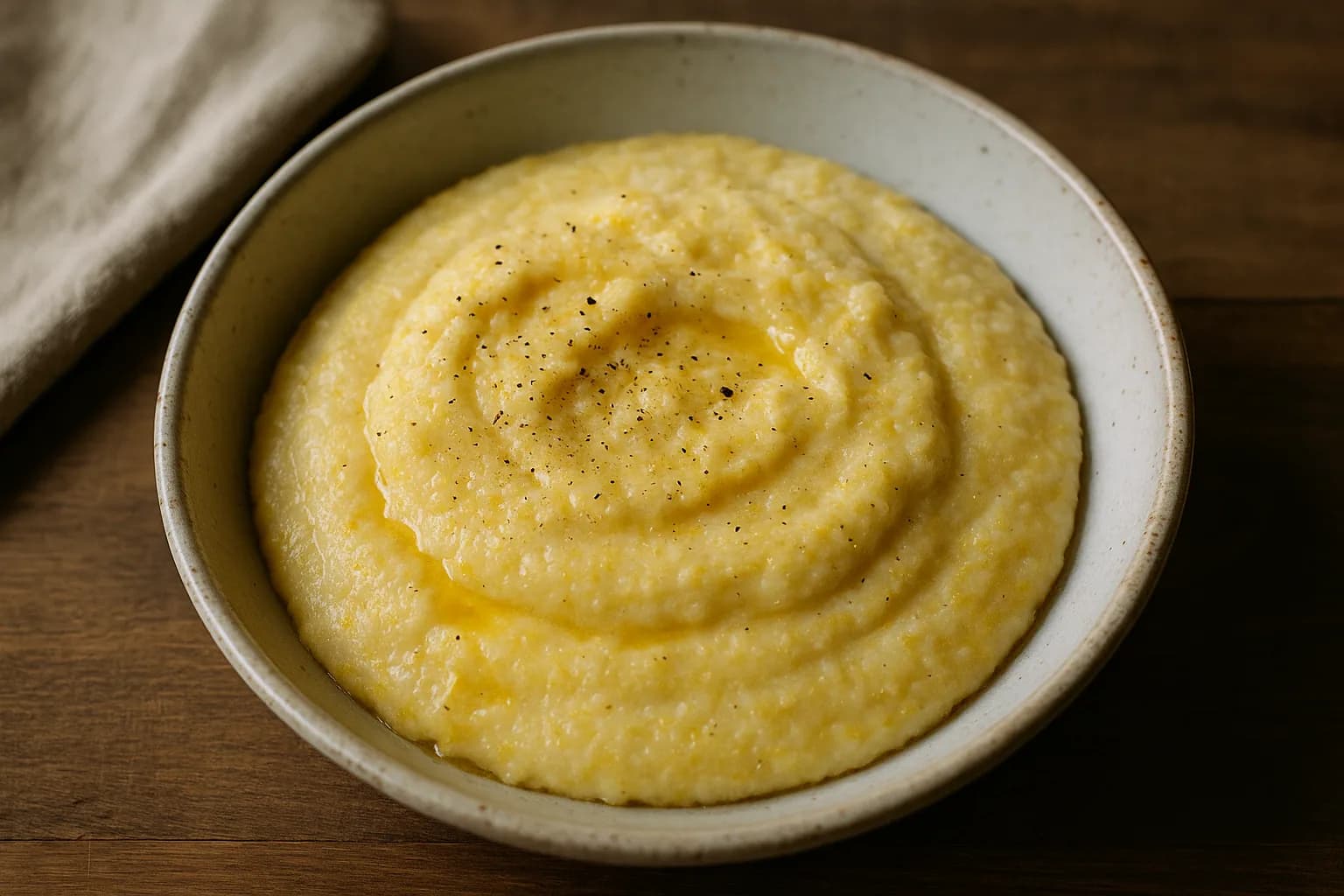
Creamy Polenta
Whip up this comforting and versatile dish in no time with just a few simple ingredients.
 Dinner
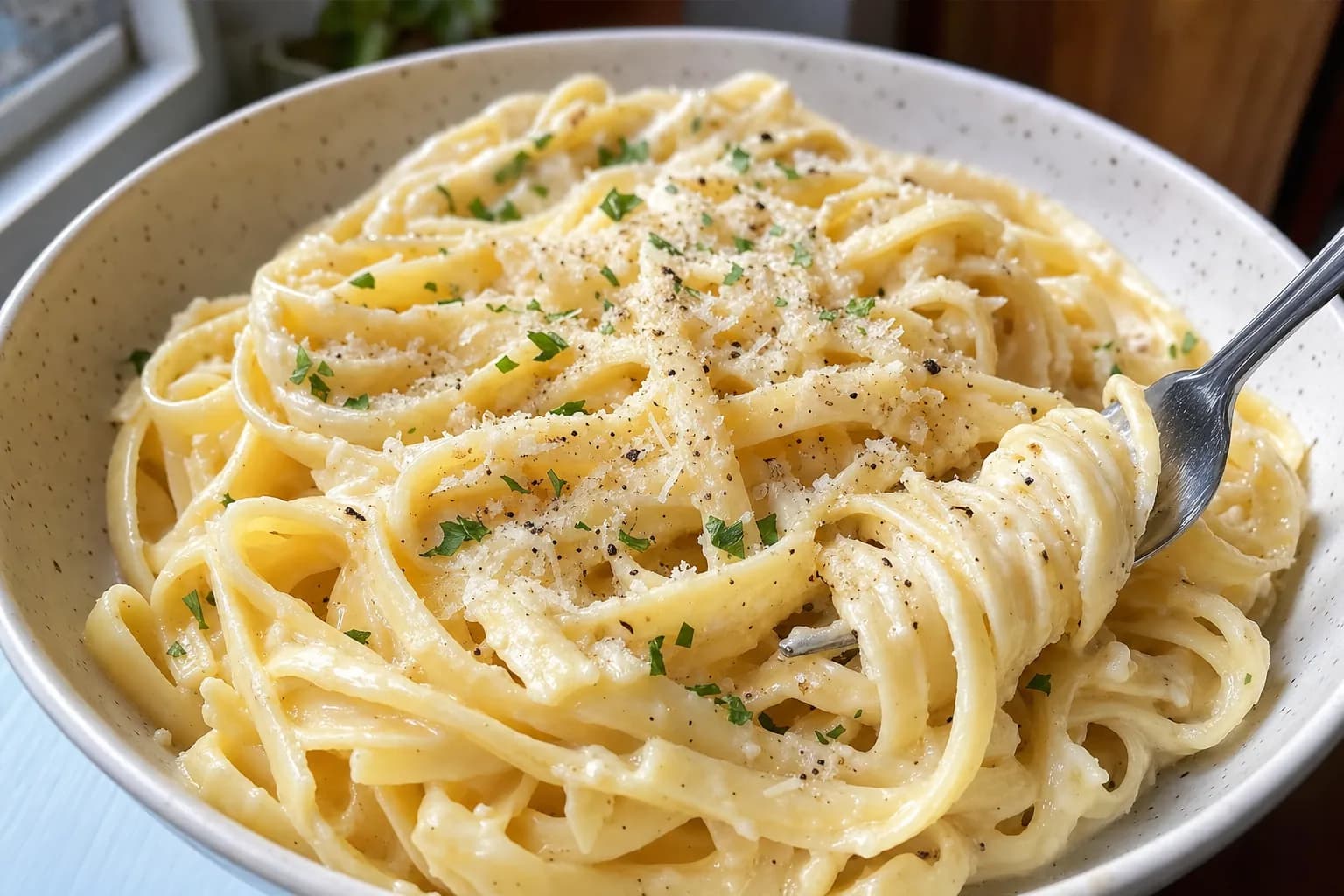
Fettuccine Alfredo
Silky fettuccine Alfredo needs only a few good ingredients: pasta, butter, Parmesan, and starchy pasta water. The trick is gentle heat and a little patience while the sauce turns glossy.
 Dinner
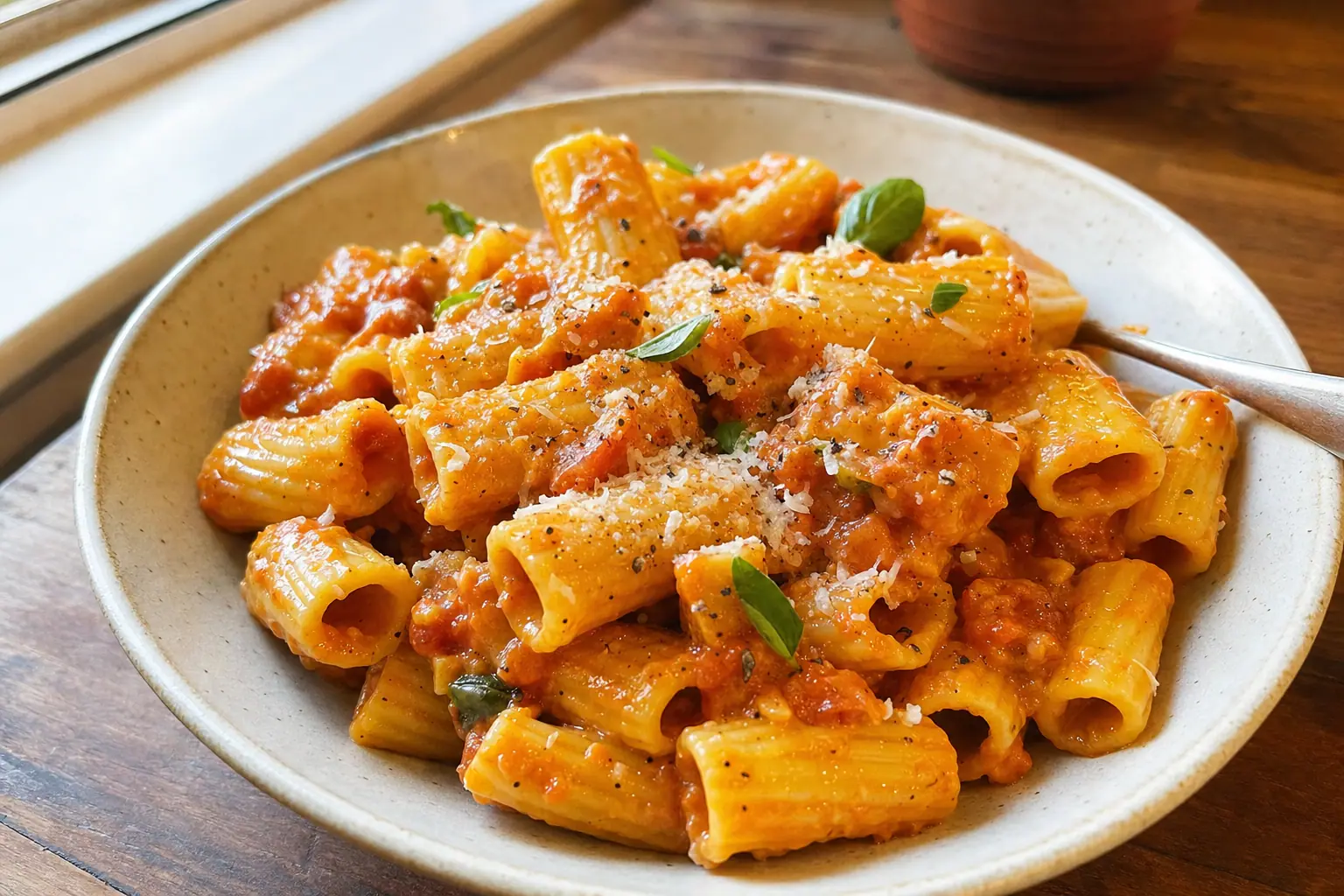
Rigatoni with Sausage Tomato Sauce
This cozy rigatoni recipe pairs sturdy pasta tubes with a simple tomato sauce, Italian sausage, garlic, and pecorino. It is weeknight-friendly, but it tastes like something you let simmer much longer.
 Dinner
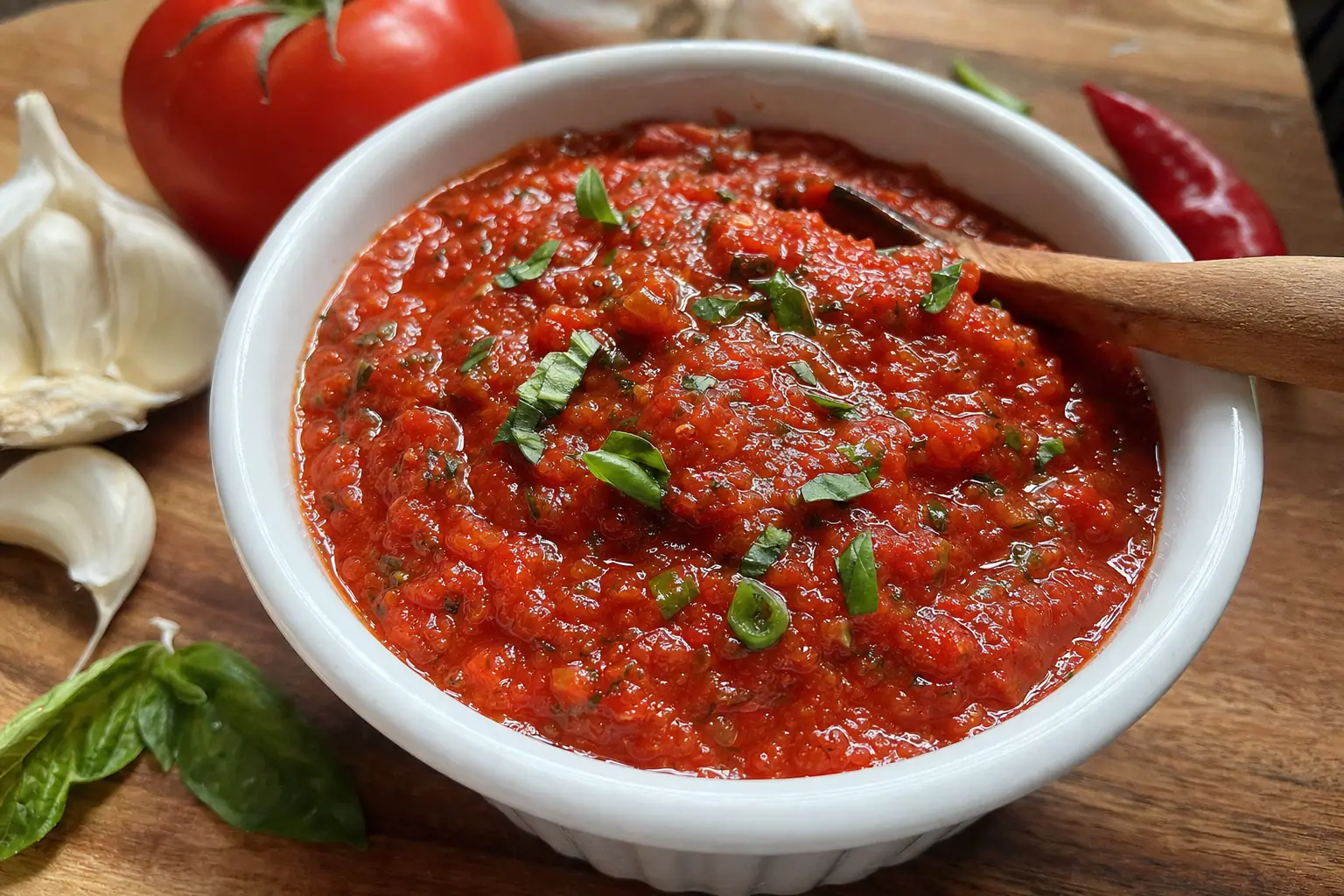
Marinara Sauce
This simple marinara sauce is bright, garlicky, and built from pantry staples. Use it for pasta, pizza, meatballs, baked eggplant, or anywhere you want a clean tomato sauce.