
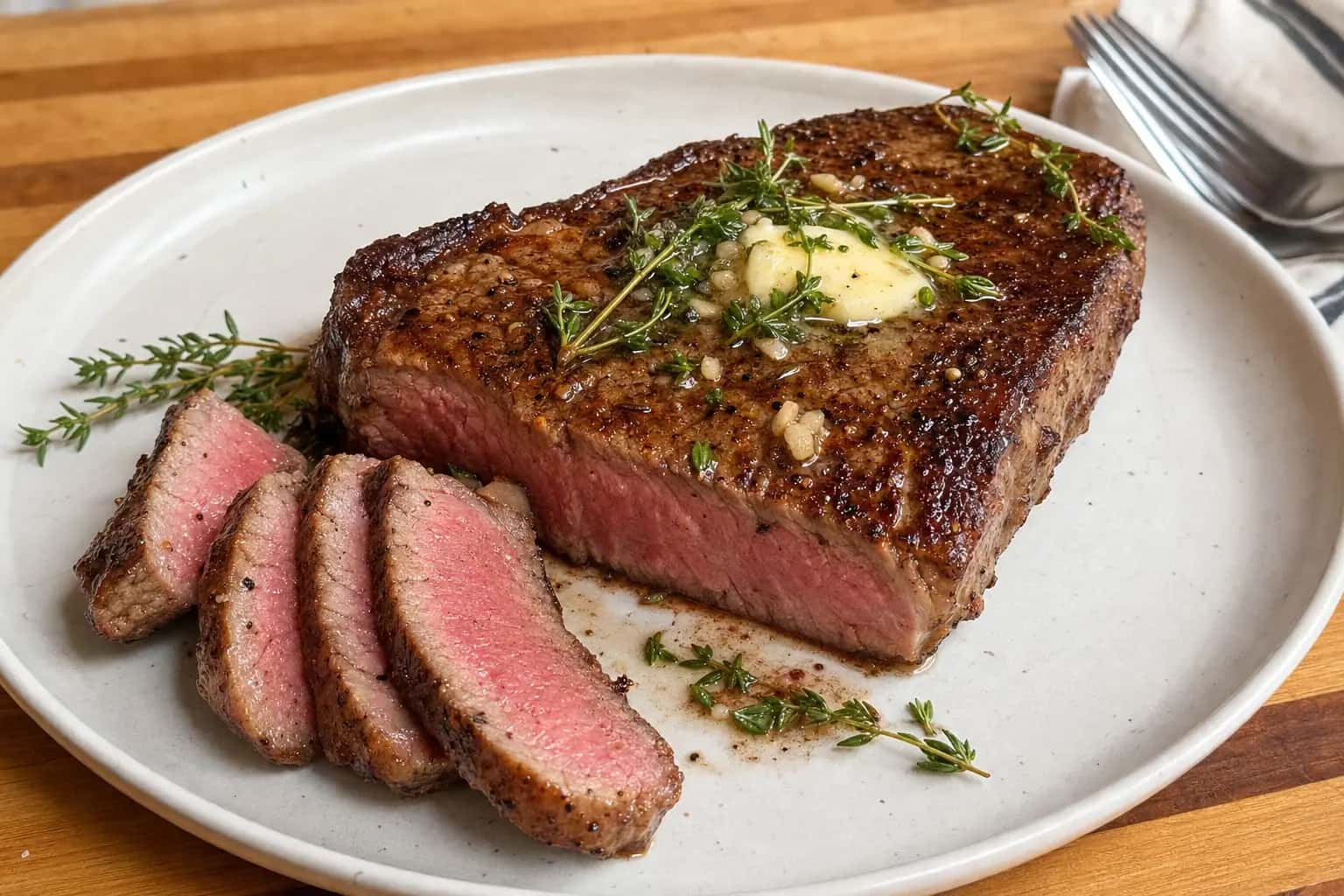
Pan-Seared Steak with Garlic Herb Butter
A simple stovetop steak with a browned crust, juicy center, and quick garlic butter baste. Use a thermometer, rest the meat, and dinner feels much calmer.
- Total time
- 22 min
- Yield
- 2 servings
- Difficulty
- Easy
Prep 10mCook 12mAmericanMain Course
A good steak does not need a long ingredient list. Salt, heat, and a short rest do most of the work. This recipe uses a heavy skillet to build a deep brown crust, then finishes the steak with a spoonful of garlic herb butter.
The main skill here is temperature control. Let the pan get hot, do not move the steak too much, and use an instant-read thermometer if you have one. It is the easiest way to cook steak the way you like it.
This method works well with top sirloin, New York strip, ribeye, or filet mignon. Cooking time changes with thickness, so treat the timing as a guide and the internal temperature as the final check.
01What you'll need
Ingredients
7 items · 2 servings
- 2 boneless beef top sirloin steaks, about 8 ounces each and 1 to 1 1/4 inches thick
- 3/4 teaspoon fine sea salt
- 1/2 teaspoon freshly ground black pepper
- 1 tablespoon neutral high-heat oil, such as canola, avocado, or grapeseed oil
- 1 tablespoon unsalted butter
- 1 large garlic clove, lightly smashed
- 2 sprigs fresh thyme or rosemary
02How to make it
Step-by-step
1. Dry the steaks
Pat the steaks very dry with paper towels. Moisture on the surface makes steam, and steam slows browning. Set the steaks on a plate or small tray.
2. Season the meat
Sprinkle both sides of the steaks with the salt and pepper. If you have time, let them sit at room temperature for 20 to 30 minutes. This short rest helps the seasoning start to dissolve and coat the meat.
3. Heat the skillet
Place a large cast-iron or heavy stainless steel skillet over medium-high heat. Let it heat for 3 to 5 minutes, until a drop of water flicked into the pan sizzles and disappears quickly.
4. Sear the first side
Add the oil and swirl to coat the pan. Carefully lay the steaks in the skillet away from you so hot oil does not splash toward your hand. Cook without moving them for 3 to 4 minutes, until the underside has a deep brown crust.
5. Flip and sear
Turn the steaks with tongs. Cook the second side for 2 to 4 minutes, depending on thickness and how done you like your steak. Lower the heat to medium if the pan starts to smoke heavily.
6. Baste with garlic butter
Add the butter, smashed garlic, and herbs to the pan. When the butter melts and foams, tilt the pan slightly and spoon the butter over the steaks for 30 to 60 seconds. This is called basting, and it adds flavor while the steak finishes cooking.
7. Check the temperature
Insert an instant-read thermometer into the thickest part of a steak. Pull the steaks from the pan at about 125°F for rare, 130°F for medium-rare, 140°F for medium, or 150°F for medium-well. The USDA recommends cooking whole cuts of beef to 145°F followed by a 3-minute rest.
8. Rest, then slice
Transfer the steaks to a cutting board and spoon a little of the pan butter over the top. Rest for 5 to 10 minutes. Slice against the grain, which means cutting across the lines of the muscle, and serve with any remaining pan juices.
03From our kitchen
Cook's tips
- Make-ahead: Steak is best cooked right before serving. You can salt it up to 24 hours ahead and refrigerate it uncovered on a rack set over a plate. This dries the surface and helps browning. Let it sit at room temperature for 20 to 30 minutes before cooking.
- Storage: Refrigerate leftover steak in an airtight container for up to 3 days. Reheat gently in a covered skillet over low heat, or slice it cold for salads and sandwiches.
- Swaps: New York strip, ribeye, filet mignon, and flat iron steak all work. Thicker steaks need more time. Very thin steaks cook fast, so skip the long butter baste and check early.
- No cast iron? Use a heavy stainless steel skillet. Avoid nonstick for high-heat searing unless the pan’s manufacturer says it is safe at high temperatures.
- If the steak is browning too fast but still undercooked inside, lower the heat to medium and keep cooking. You can also transfer it to a 375°F oven for a few minutes if your skillet is oven-safe.
- If the pan is crowded, cook one steak at a time. Crowding traps steam and can prevent a good crust.
Cook's note
Nutrition is calculated with two 8-ounce trimmed top sirloin steaks, 1 tablespoon oil, 1 tablespoon unsalted butter, and the full amount of salt. Actual sodium may be lower if some seasoning or pan butter is left behind.
04Frequently asked
Questions & answers
How do I know when steak is done without cutting into it?
Use an instant-read thermometer if possible. It gives the most reliable result and keeps the juices inside the steak. Insert it sideways into the thickest part for the cleanest reading.
Should I bring steak to room temperature before cooking?
A short rest at room temperature helps take off the chill, but it is not magic. Twenty to thirty minutes is enough for most steaks. Do not leave raw steak out for more than 2 hours.
Why did my steak not get a crust?
The surface may have been wet, the pan may not have been hot enough, or the skillet may have been crowded. Dry the steak well, preheat the pan, and give each steak space.
Can I use frozen steak?
Thaw it first for this method. Place frozen steak in the refrigerator overnight, then pat it very dry before seasoning. Cooking from frozen needs a different timing and technique.
What should I serve with steak?
Simple sides work well, such as roasted potatoes, a green salad, sautéed mushrooms, steamed green beans, or crusty bread to catch the pan juices.
05Per serving
Nutrition facts
Nutrition Facts
2 servings
Amount per serving
% Daily Value*
- Total Fat22 g
- 28%
- Saturated Fat8 g
- 40%
- Cholesterol152 mg
- 51%
- Sodium996 mg
- 43%
- Total Carbohydrate1 g
- 0%
- Dietary Fiber0 g
- 0%
- Total Sugars0 g
- Protein52 g
- 104%
- Vitamin D0.1 mcg
- 1%
- Calcium13 mg
- 1%
- Iron3.5 mg
- 19%
- Potassium770 mg
- 16%
* Percent Daily Values are based on a 2,000-calorie diet.
05Keep cooking
You might also like
 Main Course
Reverse-Seared Tomahawk Steak with Garlic Butter
A tomahawk steak looks dramatic, but the cooking method is simple: warm it gently in the oven, then sear it hard for a browned crust. A thermometer is the key to keeping this thick bone-in ribeye juicy.
 Main Course
Garlic Butter Steak and Shrimp
This skillet steak and shrimp dinner brings surf-and-turf flavor to the table without a restaurant reservation. A quick garlic butter pan sauce ties the juicy steak and tender shrimp together.
 Main Course
Braised Chicken with Carrots, Onion, and Thyme
This cozy braised chicken cooks low and slow in a savory pan sauce until the meat is tender and the vegetables are sweet. It is simple enough for a weeknight, but feels special enough for Sunday dinner.
 Main Course
Steak Pizza with Mozzarella, Peppers, and Onions
This hearty steak pizza gives you the flavor of a steakhouse pie without a long ingredient list. Cook the steak first, add it near the end, and you get tender slices instead of dry, chewy pieces.