
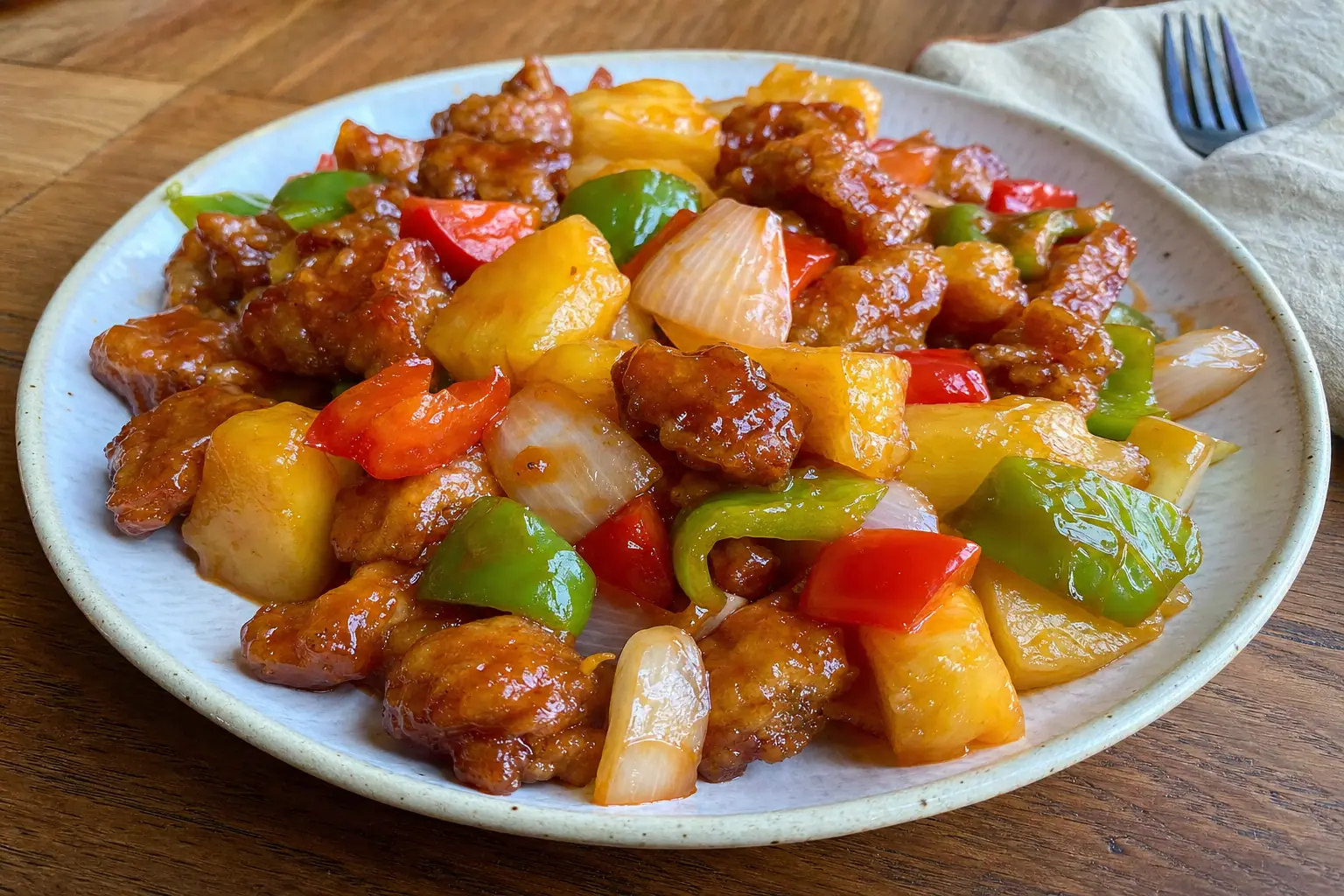
Sweet and Sour Pork
Crisp pork, juicy pineapple, and bell peppers get tossed in a glossy sweet-tart sauce for a takeout-style dinner you can make at home. The key is frying the pork in small batches, then adding the sauce right at the end.
Total
50 min
Servings
4 servings
Level
Medium
Sweet and sour pork is a Chinese-American favorite built around contrast: crisp pieces of pork, a bright red-orange sauce, and sweet pineapple tucked between crunchy peppers and onion.
This version uses pork shoulder or pork loin, cut into bite-size pieces and coated with cornstarch for a light, crackly crust. The sauce is quick to stir together with ketchup, vinegar, sugar, soy sauce, and pineapple juice, so it tastes tangy without being harsh.
Serve it right away over steamed rice. Like many fried dishes, it is at its crispest just after cooking, but there are a few easy ways to prep parts of the recipe ahead.
01What you'll need
Ingredients
20 items · 4 servings
- For the pork:
- 1 pound boneless pork shoulder or pork loin, cut into 1-inch pieces
- 1 tablespoon soy sauce
- 1 tablespoon Shaoxing wine or dry sherry, optional
- 1 teaspoon grated fresh ginger
- 1 small garlic clove, grated or minced
- 1/4 teaspoon fine salt
- 1/4 teaspoon ground white pepper or black pepper
- 1 large egg
- 1/2 cup cornstarch, plus more if needed
- 2 to 3 cups neutral oil, such as canola or vegetable oil, for frying
- For the sauce and vegetables:
- 1/3 cup ketchup
- 1/4 cup rice vinegar or cider vinegar
- 1/4 cup pineapple juice, from the canned pineapple
- 3 tablespoons packed brown sugar or white sugar
- 1 tablespoon soy sauce
- 2 teaspoons cornstarch
- 2 tablespoons water
- 1 tablespoon neutral oil, if needed for the pan after frying later steps use skillet drained of oil or fresh pan? better
02How to make it
Step-by-step
1. Marinate the pork
Put the pork in a bowl with the soy sauce, Shaoxing wine if using, ginger, garlic, salt, and pepper. Stir well, then add the egg and stir again until the pieces are evenly coated. Let stand for 10 minutes while you prepare the sauce and vegetables.
2. Mix the sauce
In a small bowl, whisk the ketchup, vinegar, pineapple juice, sugar, and soy sauce until smooth. In a second small bowl, stir the cornstarch and water together to make a slurry. A slurry is a thin starch mixture that thickens a sauce without leaving lumps.
3. Coat the pork
Add the 1/2 cup cornstarch to the marinated pork and toss until each piece has a dry, pale coating. If the pork looks wet or sticky, sprinkle in 1 to 2 more tablespoons cornstarch. The pieces should separate easily.
4. Heat the oil
Pour 1 to 1 1/2 inches of oil into a wok, Dutch oven, or deep heavy skillet. Heat over medium-high heat to 350°F. If you do not have a thermometer, drop in a tiny pinch of cornstarch-coated batter; it should sizzle right away but not darken instantly.
5. Fry the pork in batches
Carefully add about one-third of the pork to the hot oil, one piece at a time. Fry for 3 to 4 minutes, turning once or twice, until golden and cooked through. Transfer to a wire rack or a paper towel-lined plate. Repeat with the remaining pork, letting the oil return to temperature between batches.
6. Stir-fry the vegetables
Carefully pour off the frying oil into a heatproof container, leaving about 1 tablespoon in the pan, or use a clean large skillet with 1 tablespoon fresh oil. Set over medium-high heat. Add the bell peppers and onion and stir-fry for 2 to 3 minutes, until crisp-tender. Add the pineapple and cook for 30 seconds.
7. Thicken the sauce
Pour the ketchup mixture into the pan and bring it to a lively simmer. Stir the cornstarch slurry again, then add it to the sauce. Cook for 30 to 60 seconds, stirring, until the sauce turns glossy and thick enough to coat a spoon.
8. Toss and serve
Add the fried pork to the pan and toss quickly until every piece is lightly coated. Remove from the heat and serve right away with steamed rice. Do not let the pork sit in the sauce for long, or the coating will soften.
03From our kitchen
Cook's tips
- Make-ahead: Mix the sauce and cut the vegetables up to 1 day ahead. Store them separately in the refrigerator. For the best texture, coat and fry the pork just before serving.
- Storage: Refrigerate leftovers in an airtight container for up to 3 days. The pork will not stay crisp, but it will still taste good.
- Reheating: Warm leftovers in a skillet over medium heat or in a 350°F oven until hot. A microwave works too, but it makes the coating softer.
- Pork swaps: Pork shoulder gives juicy pieces with a little chew. Pork loin is leaner and cooks quickly, so avoid over-frying it. Chicken thigh can also be used; cook until the center reaches 165°F.
- Vegetable swaps: Try green bell pepper, snap peas, carrots, or zucchini. Keep the pieces bite-size so they cook fast.
- No pineapple? Use orange juice in the sauce and skip the pineapple chunks, or use canned peaches for a sweeter variation. The flavor will change, but the method still works.
Cook's note
For a brighter sauce, start with 3 tablespoons sugar and add more only if needed. Ketchup brands vary in sweetness, and canned pineapple juice can be quite sweet.
04Frequently asked
Questions & answers
Can I bake the pork instead of frying it?
You can, but it will not be as crisp. Place the cornstarch-coated pork on an oiled wire rack set over a baking sheet. Spray or brush with oil and bake at 425°F for 18 to 22 minutes, turning once, until cooked through. Toss with the sauce just before serving.
Why did my pork coating fall off?
The pork may have been too wet, the oil may have been too cool, or the pieces may have been crowded in the pan. Make sure the coating looks dry before frying, keep the oil around 350°F, and fry in small batches.
Can I use fresh pineapple?
Yes. Use about 1 cup fresh pineapple chunks. For the sauce, replace the canned pineapple juice with orange juice, apple juice, or water with an extra teaspoon of sugar.
How do I know the pork is cooked?
The pieces should be golden outside and no longer pink in the thickest part. For accuracy, use an instant-read thermometer. Pork is safe at 145°F followed by a 3-minute rest, though small fried pieces often read higher by the time they are crisp.
Can I make sweet and sour pork gluten-free?
Yes, if you use gluten-free soy sauce or tamari and check that your ketchup and vinegar are gluten-free. Cornstarch is naturally gluten-free, but always check the package if you are cooking for someone with celiac disease.
05Keep cooking
You might also like
 Dinner
Pork Fried Rice
This pork fried rice is a fast, flexible dinner built for leftover rice and a hot skillet. Tender pork, eggs, vegetables, and soy sauce come together in one pan with plenty of savory flavor.
 Dinner
Pan-Fried Pork and Cabbage Dumplings
These tender, crisp-bottomed dumplings are filled with juicy pork, napa cabbage, ginger, and scallions. They take a little time to fold, but the steps are simple and very doable at home.
 Dinner
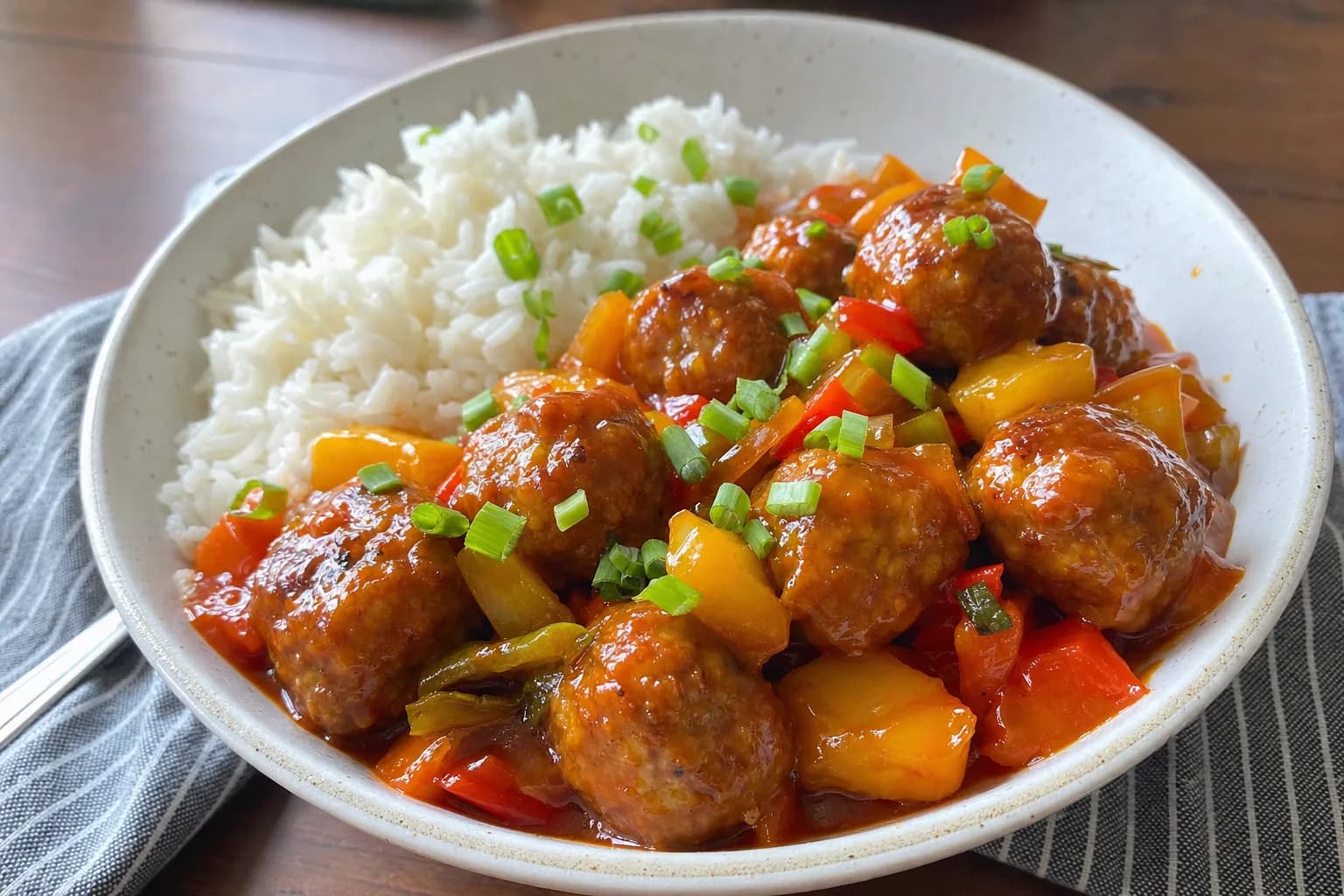
Sweet and Sour Meatballs
Tender baked meatballs meet a glossy sweet-tangy sauce with pineapple and bell pepper. Serve them over rice for dinner, or keep them warm as a party appetizer.
 Dinner
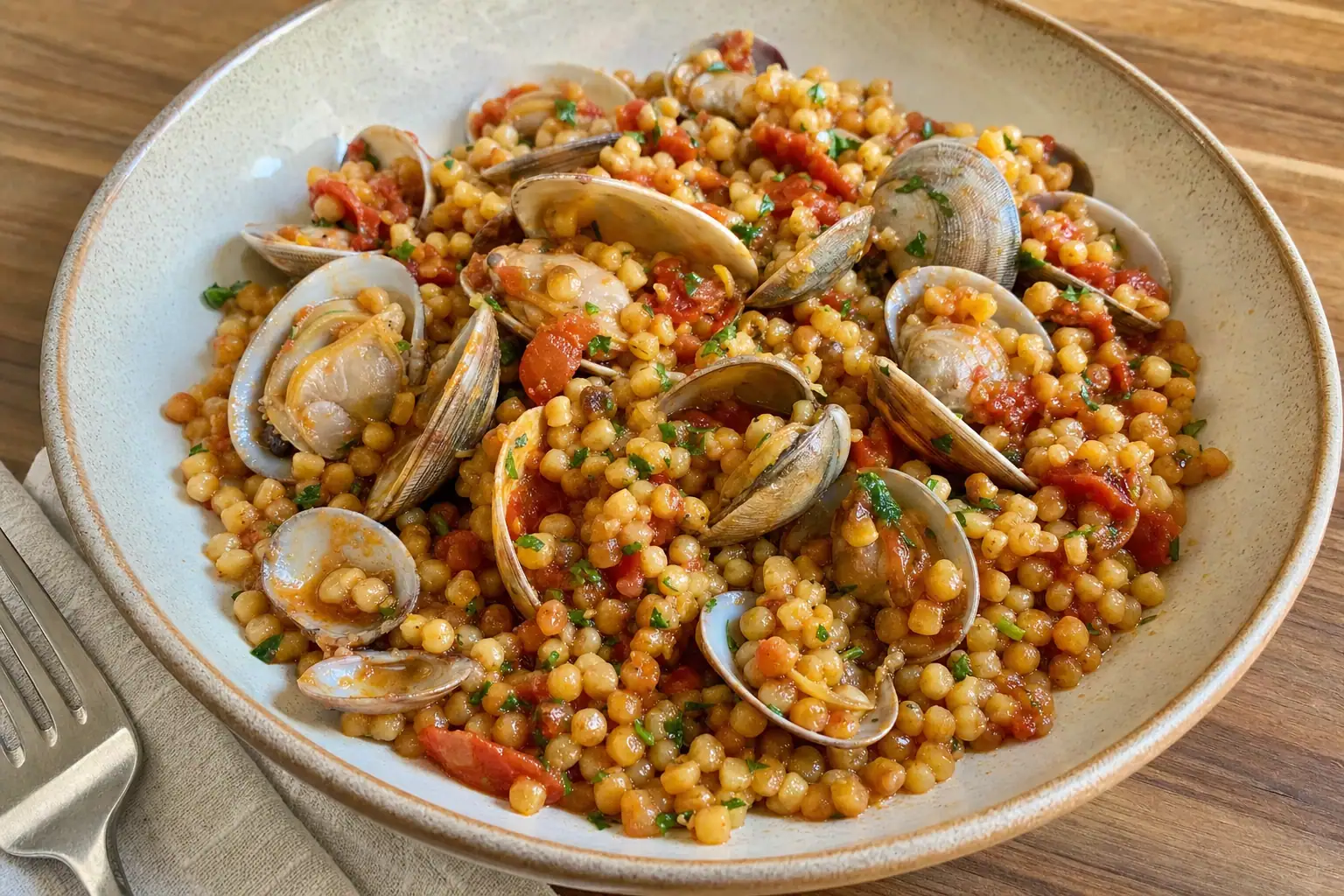
Fregola Sarda with Clams and Tomatoes
Fregola sarda is a small, toasted Sardinian pasta with a nutty flavor and a chewy bite. This one-pan version simmers it with tomatoes, white wine, and clams for a simple coastal dinner.