
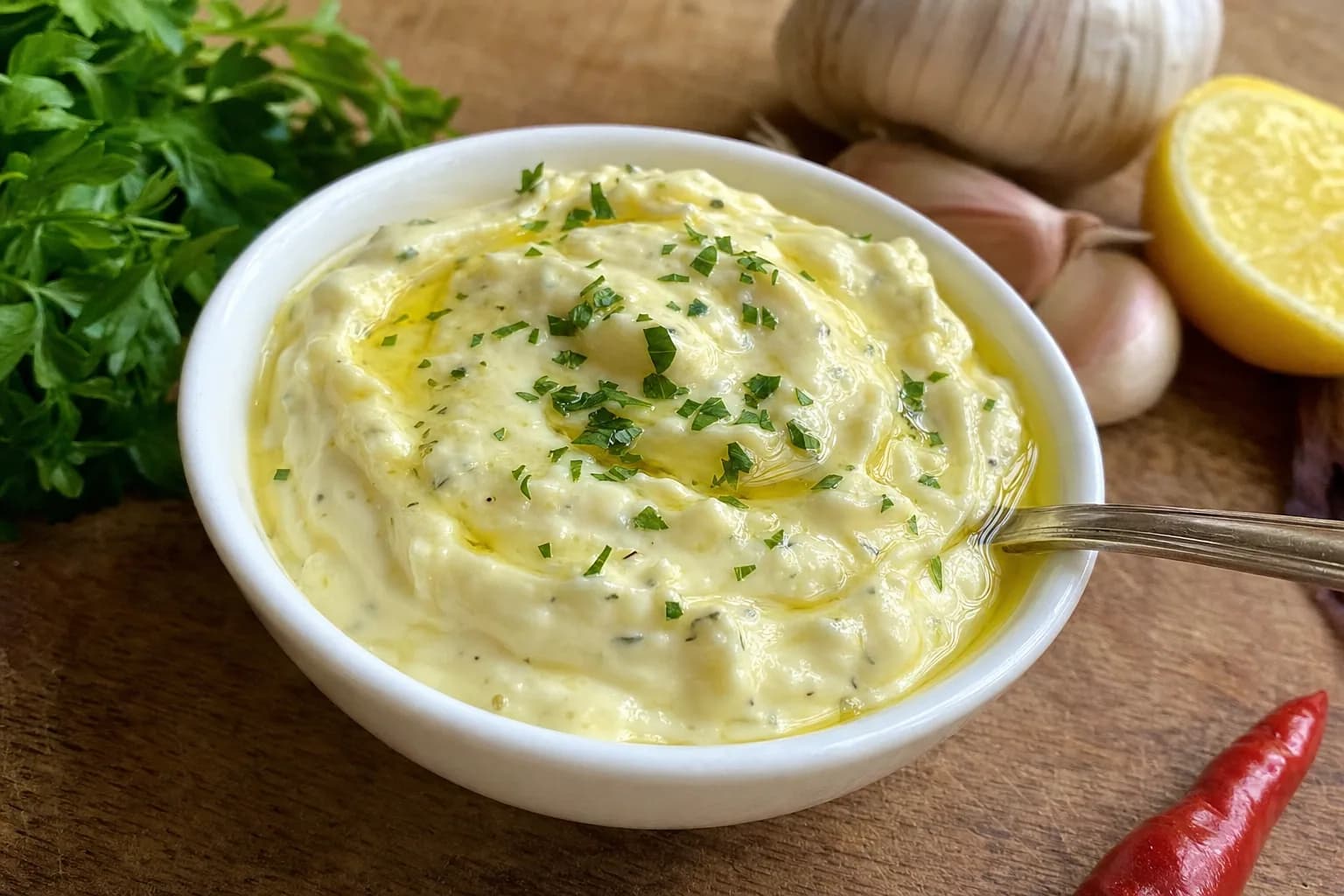
Garlic Aioli
Creamy, garlicky aioli is a simple sauce that makes fries, sandwiches, grilled vegetables, and seafood feel more complete. This version uses an egg yolk and a slow stream of oil for a smooth, spoonable texture.
Total
12 min
Servings
About 1 cup
Level
Medium
Garlic aioli started as a Mediterranean garlic-and-oil sauce, and many modern versions are close cousins of homemade mayonnaise. The idea is simple: mash garlic, then whisk it with egg yolk, lemon, and oil until it turns thick and glossy.
The only tricky part is the emulsion. An emulsion means two ingredients that do not usually mix, like oil and lemon juice, are held together in a creamy sauce. Add the oil slowly at first, and the sauce will come together.
Use this aioli as a dip for roasted potatoes, a spread for burgers or sandwiches, or a sauce for grilled fish, chicken, or vegetables.
01What you'll need
Ingredients
9 items · About 1 cup
- 2 small garlic cloves, peeled
- 1/2 teaspoon fine sea salt, plus more to taste
- 1 large pasteurized egg yolk, at room temperature
- 2 teaspoons fresh lemon juice, plus more to taste
- 1 teaspoon Dijon mustard, optional but helpful
- 3/4 cup neutral oil, such as canola, grapeseed, or sunflower oil
- 1/4 cup extra-virgin olive oil
- 1 to 2 teaspoons cool water, as needed
- Freshly ground black pepper, optional
02How to make it
Step-by-step
1. Make a garlic paste
Finely chop the garlic. Sprinkle it with the salt, then use the flat side of a chef’s knife to mash and scrape it against the cutting board until it becomes a paste. This helps the garlic blend smoothly into the sauce.
2. Set up the bowl
Put the garlic paste, egg yolk, lemon juice, and Dijon mustard, if using, in a medium bowl. Place the bowl on a damp kitchen towel to keep it steady while you whisk.
3. Whisk the base
Whisk the mixture for about 30 seconds, until the yolk looks smooth and slightly lighter in color. This gives the emulsion a good start.
4. Add the first oil slowly
Begin adding the neutral oil a few drops at a time while whisking constantly. Do not rush this part. Once the mixture starts to look thick and creamy, you can add the oil in a very thin, steady stream.
5. Whisk in the rest of the oils
Continue whisking and slowly pour in the remaining neutral oil. Then whisk in the olive oil in a thin stream. If the aioli gets very thick before all the oil is added, whisk in 1 teaspoon of cool water to loosen it.
6. Adjust the texture
Check the sauce. It should be thick enough to hold soft peaks on a spoon but still easy to spread. Whisk in another teaspoon of cool water if you want a lighter, dip-style texture.
7. Taste and season
Taste the aioli and add more lemon juice, salt, or black pepper if you like. If the garlic tastes sharp, let the aioli rest for 10 to 15 minutes in the refrigerator; the flavor will mellow slightly.
8. Serve or chill
Serve right away, or cover and refrigerate until needed. Stir before serving, especially if it has been sitting for a few hours.
03From our kitchen
Cook's tips
- Make-ahead: Garlic aioli can be made a few hours ahead, and the flavor often improves after a short rest in the refrigerator.
- Storage: Because this recipe contains egg yolk, keep it covered in the refrigerator and use it within 3 days. Do not leave it at room temperature for more than 2 hours.
- Egg safety: Use a pasteurized egg yolk if possible, especially when serving children, older adults, pregnant people, or anyone with a weakened immune system. Pasteurized eggs have been gently heat-treated to reduce food safety risk.
- Shortcut swap: For a no-raw-egg version, stir 1 to 2 grated garlic cloves, 1 teaspoon lemon juice, and a pinch of salt into 1 cup of good mayonnaise. Let it sit 10 minutes before serving.
- Oil choice: A little olive oil adds flavor, but all olive oil can taste bitter or heavy. A mix of neutral oil and olive oil gives a smoother result.
- If it breaks: A broken aioli looks thin, oily, or curdled. Put 1 teaspoon water or lemon juice in a clean bowl, then slowly whisk the broken aioli into it, a spoonful at a time, until it becomes creamy again.
Cook's note
For a milder aioli, remove the small green sprout from the center of each garlic clove if you see one. It can taste sharp or bitter, especially in raw sauces.
04Frequently asked
Questions & answers
Can I make garlic aioli without mustard?
Yes. Mustard helps the sauce emulsify, but it is not required. If you skip it, add the oil extra slowly at the beginning and keep whisking steadily.
Why did my aioli turn thin or oily?
The oil was probably added too quickly, so the emulsion broke. Start with 1 teaspoon water or lemon juice in a clean bowl, then whisk in the broken aioli very slowly until it thickens again.
Can I use a blender or food processor?
Yes. Blend the garlic, yolk, lemon juice, and mustard first. With the machine running, drizzle in the oil very slowly. A small food processor or immersion blender works better than a large blender for this amount.
How garlicky is this aioli?
Two small raw cloves give a clear garlic flavor. For a gentler sauce, use 1 clove. For a stronger sauce, use 3 cloves, but add the extra garlic gradually and taste as you go.
What should I serve with garlic aioli?
Serve it with fries, roasted potatoes, steamed artichokes, grilled shrimp, fish, chicken, burgers, sandwiches, or roasted vegetables. It also works as a quick dip for raw carrots, cucumbers, and radishes.
05Keep cooking
You might also like
 Salads & sides
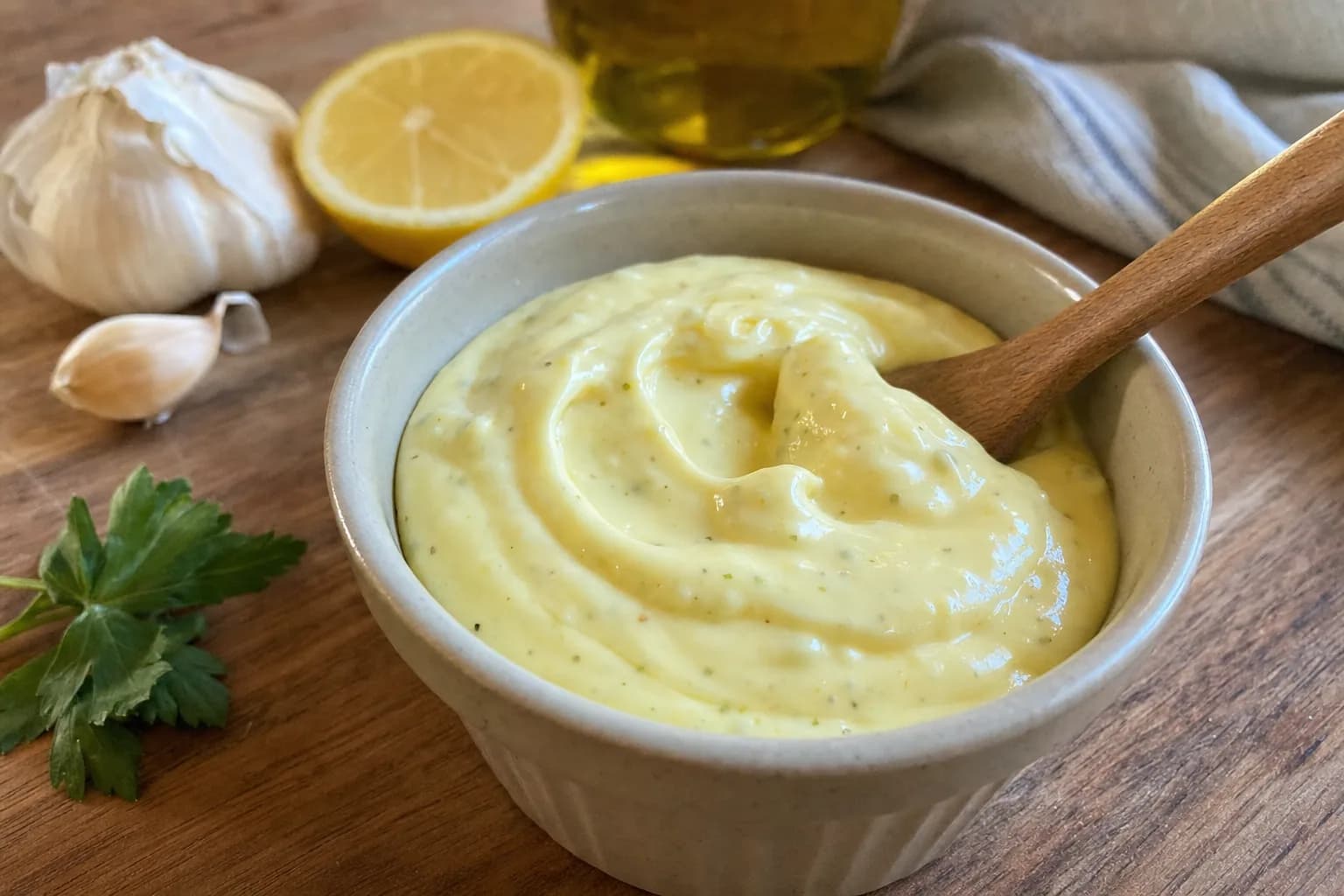
Garlic Aioli
Creamy garlic aioli is a simple sauce for fries, sandwiches, roasted vegetables, seafood, and grain bowls. This version uses an egg yolk, lemon, and a slow stream of oil to make a thick, glossy emulsion at home.
 Salads & sides
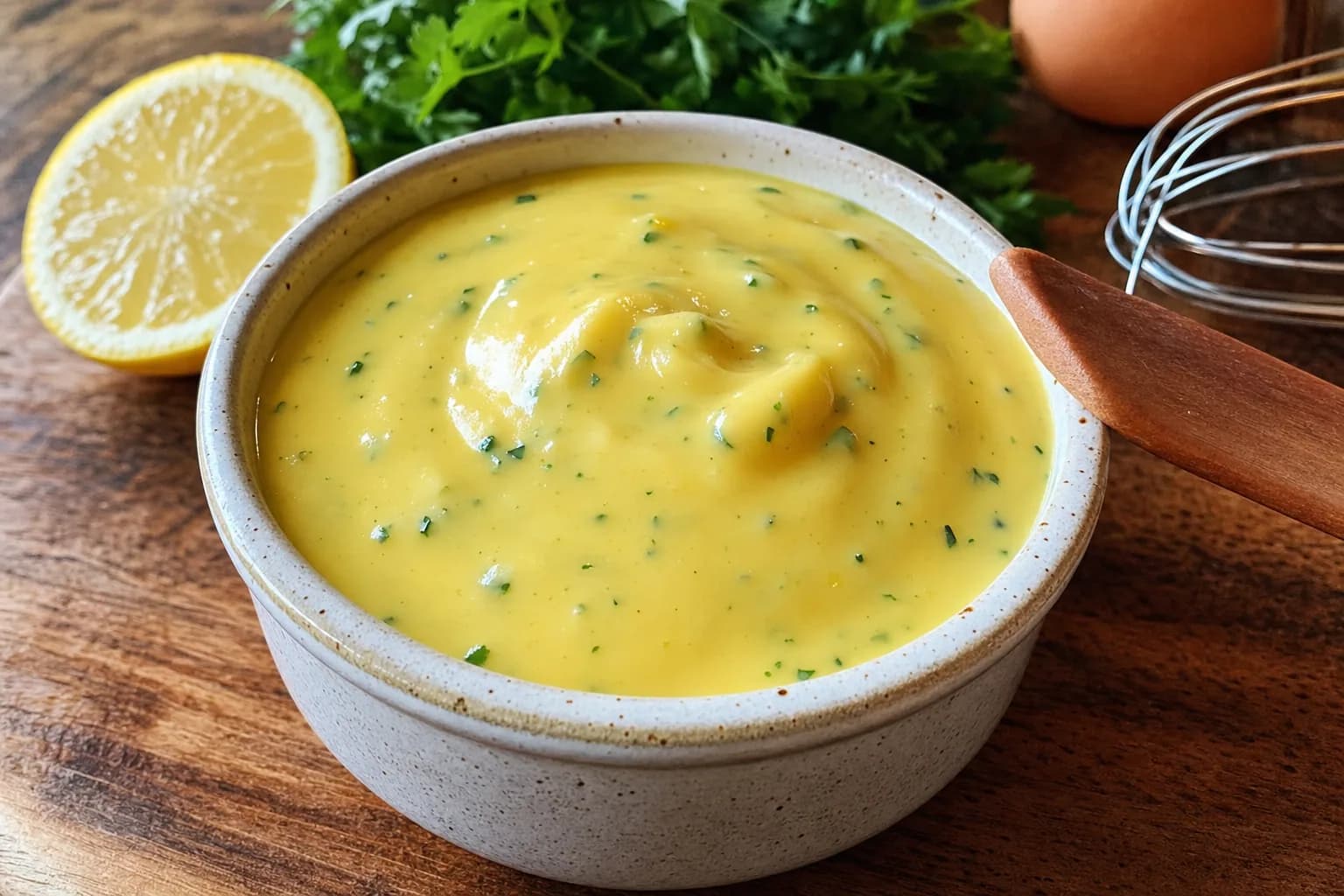
Classic Hollandaise Sauce
This silky lemon-butter sauce is the one to spoon over eggs Benedict, asparagus, salmon, or roasted potatoes. A gentle heat and slow stream of butter make it smooth, rich, and doable at home.
 Salads & sides
Béchamel Sauce
A smooth béchamel is one of the most useful sauces you can learn. This simple white sauce turns milk, butter, and flour into the creamy base for lasagna, gratins, croque monsieur, and baked pasta.
 Salads & sides
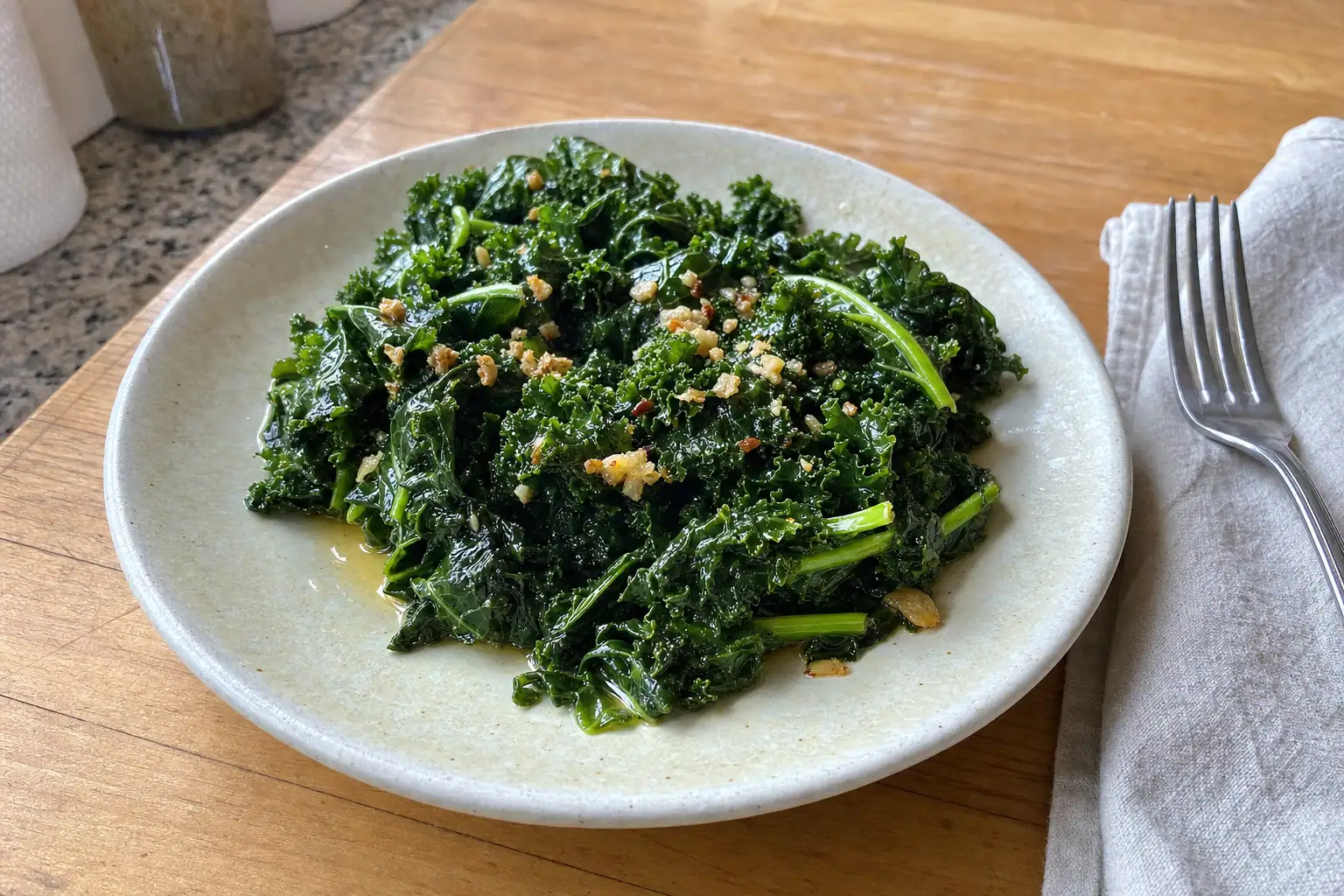
Garlic Kale
This simple garlic kale is tender, bright, and ready in about 20 minutes. It is a useful side dish for weeknights, grain bowls, eggs, pasta, or roasted chicken.