
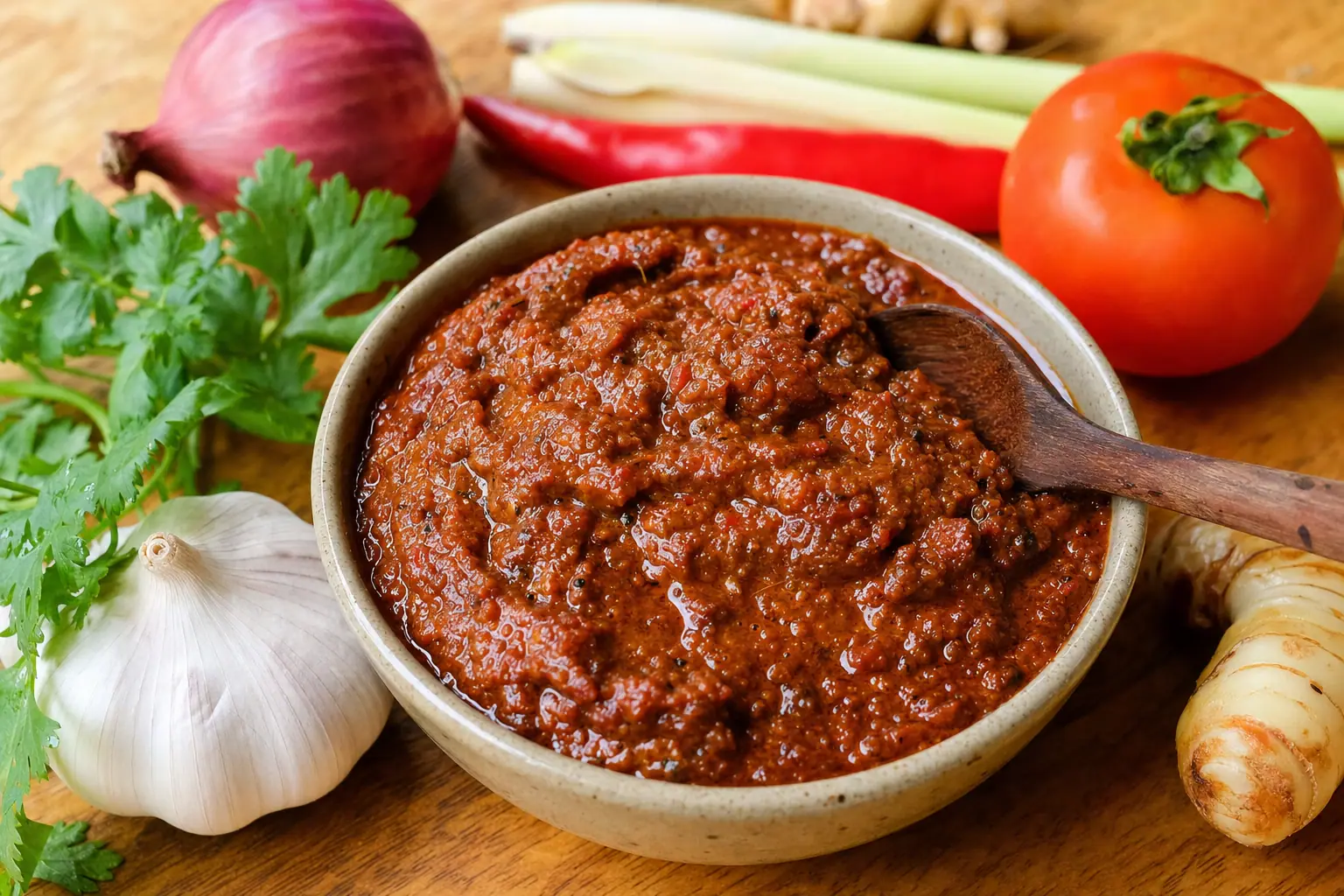
Massaman Curry Paste
This homemade massaman curry paste is warm, fragrant, and gently spicy, with toasted spices, dried chiles, lemongrass, garlic, and shallots. It is vegan as written, so you can use it in vegetable, tofu, chickpea, or meat
- Total time
- 35 min
- Yield
- Makes about 1 cup, or 8 servings of 2-tb
- Difficulty
- Medium
Prep 25mCook 10mThaiVegan Recipes
Massaman curry paste is different from many Thai curry pastes because it leans into warm spices. Coriander, cumin, cardamom, cloves, cinnamon, and nutmeg give it a cozy aroma that works well with coconut milk, potatoes, peanuts, tofu, chickpeas, or vegetables.
Making curry paste at home takes a little chopping and toasting, but the flavor is fresh and flexible. You can keep it mild with larger dried chiles, or add small Thai chiles if you like more heat.
This version uses white miso instead of shrimp paste, which adds salty, savory depth while keeping the paste vegan. A food processor makes it easy, though a mortar and pestle gives a slightly more traditional texture.
01What you'll need
Ingredients
18 items · Makes about 1 cup, or 8 servings of 2-tb
- 8 large dried mild red chiles, such as guajillo or New Mexico chiles, about 24 g, stemmed, seeded, and torn into pieces
- 2 to 4 small dried Thai chiles, about 3 g, optional, for extra heat
- 3 medium shallots, about 90 g, peeled and roughly chopped
- 6 garlic cloves, about 18 g, peeled
- 2 tender lemongrass stalk centers, about 30 g, very thinly sliced
- 1 tablespoon peeled chopped galangal or fresh ginger, about 15 g
- 1 teaspoon finely grated makrut lime zest or regular lime zest, about 2 g
- 1 tablespoon coriander seeds
- 1 teaspoon cumin seeds
- Seeds from 4 green cardamom pods, or 1/4 teaspoon ground cardamom
- 3 whole cloves
- 1/2 teaspoon white peppercorns, or 1/4 teaspoon ground white pepper
- 1/2 teaspoon ground cinnamon
- 1/4 teaspoon ground nutmeg
- 1 teaspoon fine sea salt
- 1 tablespoon white miso, preferably gluten-free if needed
- 2 tablespoons neutral oil, such as avocado, canola, or grapeseed oil
- 1 to 3 tablespoons water or reserved chile soaking water, as needed for blending
02How to make it
Step-by-step
1. Soak the chiles
Put the dried mild chiles and optional Thai chiles in a heatproof bowl. Cover with very hot water and let them soak for 15 minutes, until softened. Drain them well, but save a few tablespoons of the soaking water in case the paste needs help blending.
2. Toast the whole spices
Set a dry skillet over medium heat. Add the coriander seeds, cumin seeds, cardamom seeds, cloves, and white peppercorns. Toast for 2 to 3 minutes, shaking the pan often, until the spices smell fragrant. Do not let them blacken, or the paste can taste bitter.
3. Warm the aromatics
In the same dry skillet, add the shallots, garlic, lemongrass, and galangal or ginger. Cook for 5 to 7 minutes, stirring often, until the edges pick up a little color and the lemongrass smells bright. This step softens their sharp bite.
4. Grind the spices
Transfer the toasted whole spices to a spice grinder or mortar and pestle. Grind to a fine powder. Stir in the cinnamon and nutmeg. If using ground cardamom or ground white pepper, add them here instead of toasting them.
5. Blend the paste
Add the drained chiles, warmed aromatics, ground spice mixture, lime zest, salt, miso, and oil to a food processor or blender. Process until a thick paste forms, stopping to scrape down the sides.
6. Adjust the texture
If the mixture is too stiff to blend, add water or reserved chile soaking water 1 tablespoon at a time. The finished paste should be thick and spoonable, not runny. It will taste strong, salty, and intense on its own; that is normal for curry paste.
7. Portion and use
Spoon the paste into a clean jar. Use about 3 to 4 tablespoons paste for one 13.5-ounce can of coconut milk when making curry, adjusting to taste. Fry the paste in a little oil for 1 to 2 minutes before adding coconut milk to wake up the flavors.
03From our kitchen
Cook's tips
- Make-ahead: This paste is a good make-ahead project. The flavor settles and becomes more rounded after a night in the fridge.
- Storage: Refrigerate in a clean, covered jar for up to 1 week. Smooth a thin layer of oil over the surface to help protect it from air.
- Freezing: Freeze in 2-tablespoon portions in an ice cube tray. Once solid, move the cubes to a freezer bag and freeze for up to 3 months.
- Chile swaps: Guajillo and New Mexico chiles keep the paste mild and fruity. Dried arbol or Thai chiles add sharper heat, so use them lightly.
- Galangal swap: Galangal has a piney, citrusy flavor, but fresh ginger works well if that is what you can find.
- Miso note: White miso replaces the savory depth of shrimp paste. For a soy-free version, skip the miso and add 1 extra teaspoon oil plus a small pinch more salt, to taste.
Cook's note
Nutrition is calculated for 2 tablespoons paste, based on a batch that yields about 1 cup. Values will vary with chile size, miso brand, salt type, and how much soaking water is added.
04Frequently asked
Questions & answers
How much massaman curry paste should I use for one curry?
Start with 3 tablespoons paste for one 13.5-ounce can of coconut milk. Use 4 tablespoons if you want a stronger curry. Fry the paste briefly in oil before adding coconut milk for better flavor.
Is this massaman curry paste very spicy?
It is mild to medium if you use large dried chiles such as guajillo or New Mexico chiles and remove the seeds. The optional small Thai chiles make it hotter, so add fewer if you are cooking for kids or spice-sensitive eaters.
Can I use ground spices instead of whole spices?
Yes. Use 1 tablespoon ground coriander, 1 teaspoon ground cumin, 1/4 teaspoon ground cardamom, a small pinch of ground cloves, and 1/4 teaspoon ground white pepper. Add them directly to the blender with the cinnamon and nutmeg. The flavor will still be good, though whole toasted spices taste fresher.
Do I need a mortar and pestle?
No. A food processor or strong blender works for this recipe. Slice the lemongrass very thinly first, because it is fibrous and can stay stringy if added in large pieces.
Why does my curry paste taste bitter?
The most common reason is over-toasted spices or scorched dried chiles. Toast over medium heat, keep the spices moving, and remove them from the pan as soon as they smell fragrant.
05Per serving
Nutrition facts
Nutrition Facts
Makes about 1 cup, or 8 servings of 2-tb
Amount per serving
% Daily Value*
- Total Fat4 g
- 5%
- Saturated Fat0.4 g
- 2%
- Cholesterol0 mg
- 0%
- Sodium376 mg
- 16%
- Total Carbohydrate8 g
- 3%
- Dietary Fiber2 g
- 7%
- Total Sugars3 g
- Protein1 g
- 2%
- Vitamin D0 mcg
- 0%
- Calcium33 mg
- 3%
- Iron1.1 mg
- 6%
- Potassium163 mg
- 3%
* Percent Daily Values are based on a 2,000-calorie diet.
05Keep cooking
You might also like
 Vegan Recipes
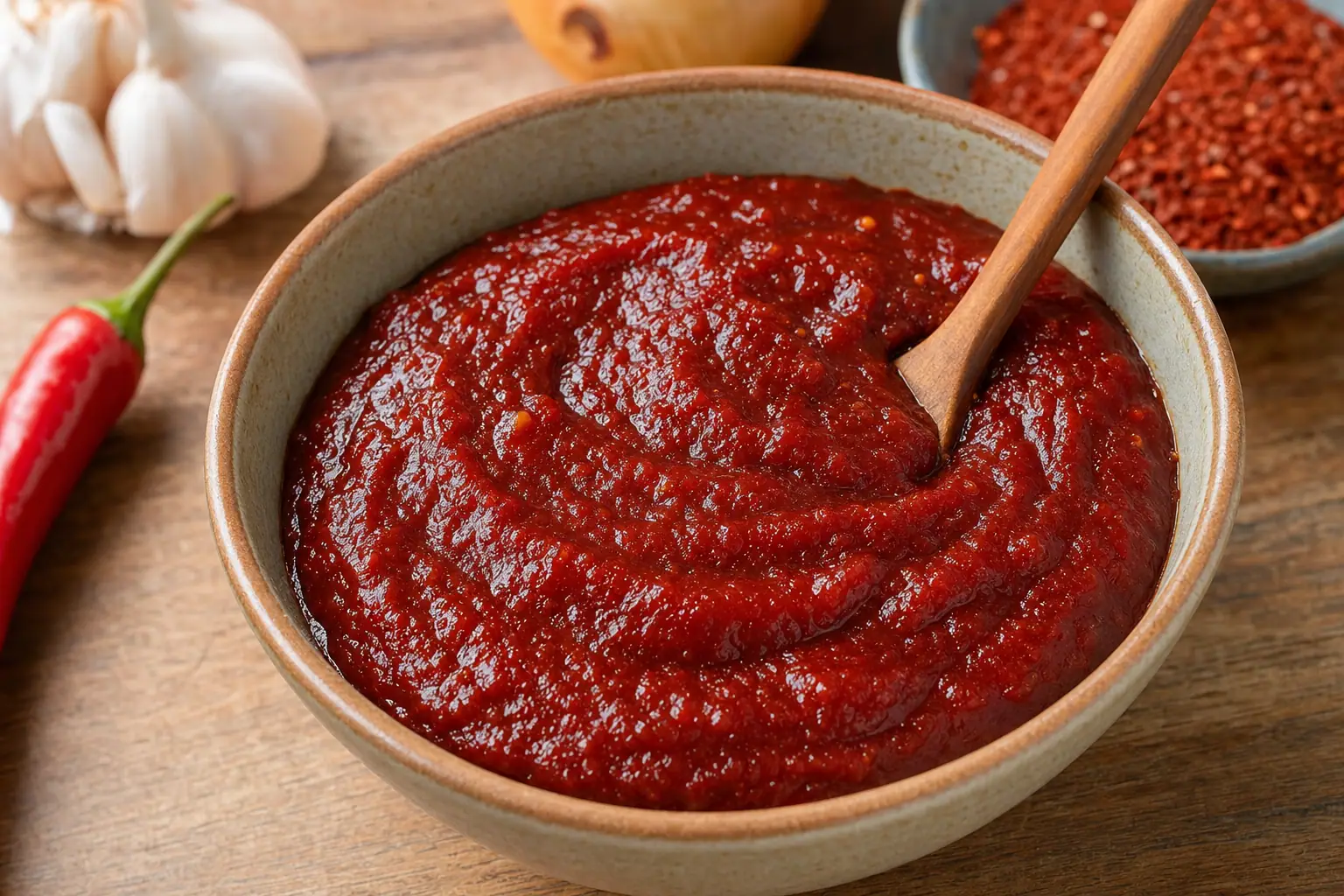
Quick Homemade Gochujang-Style Paste
This shortcut gochujang-style paste brings together miso, gochugaru, maple syrup, garlic, and vinegar for a spicy-sweet Korean-inspired condiment you can make in minutes. It is not traditionally fermented, but it is very
 Vegan Recipes
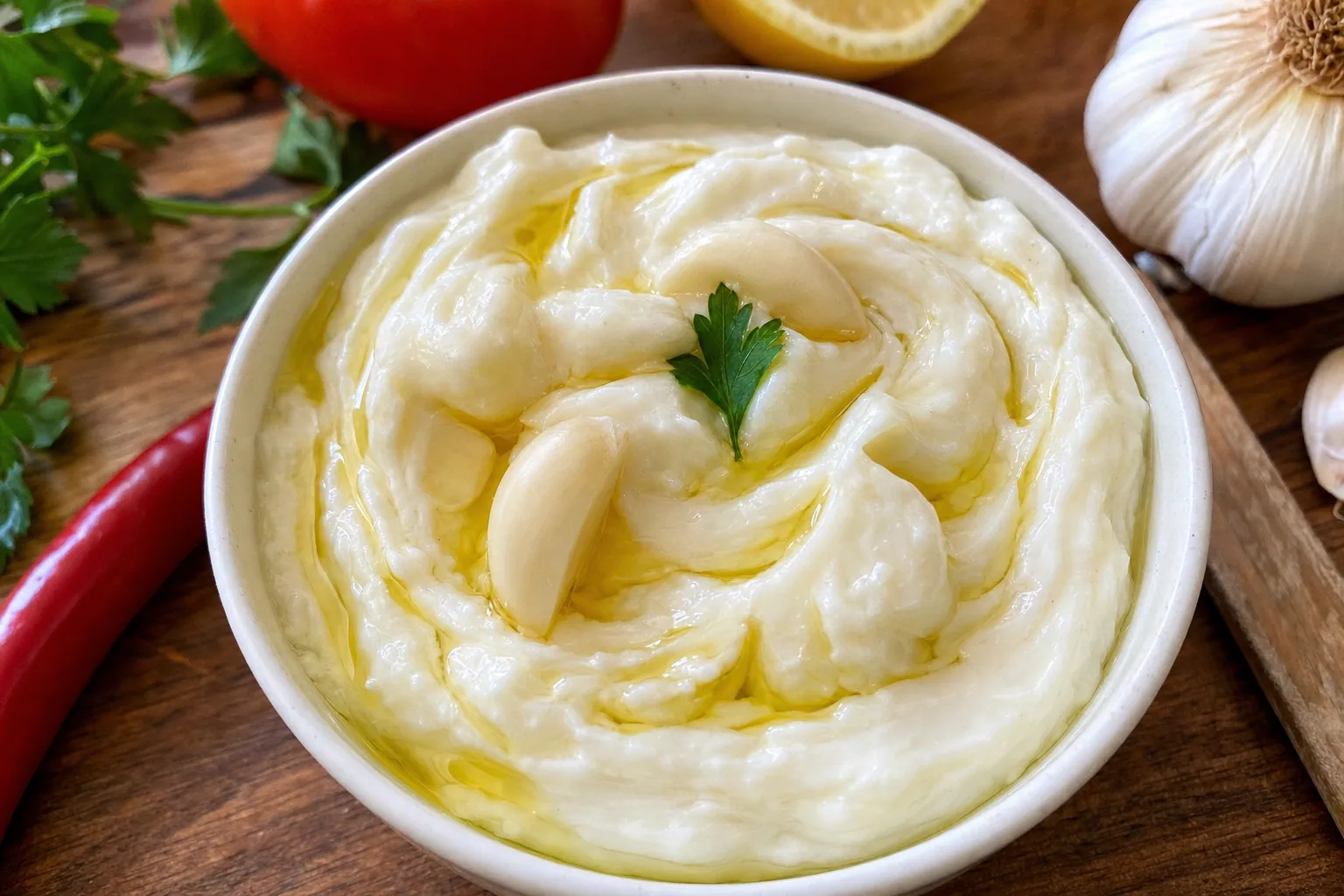
Toum (Lebanese Garlic Sauce)
Toum is the fluffy, bold garlic sauce served with shawarma, grilled vegetables, fries, and warm pita. This version uses the classic vegan emulsion method: garlic, oil, lemon juice, and salt blended slowly until thick and
 Vegan Recipes
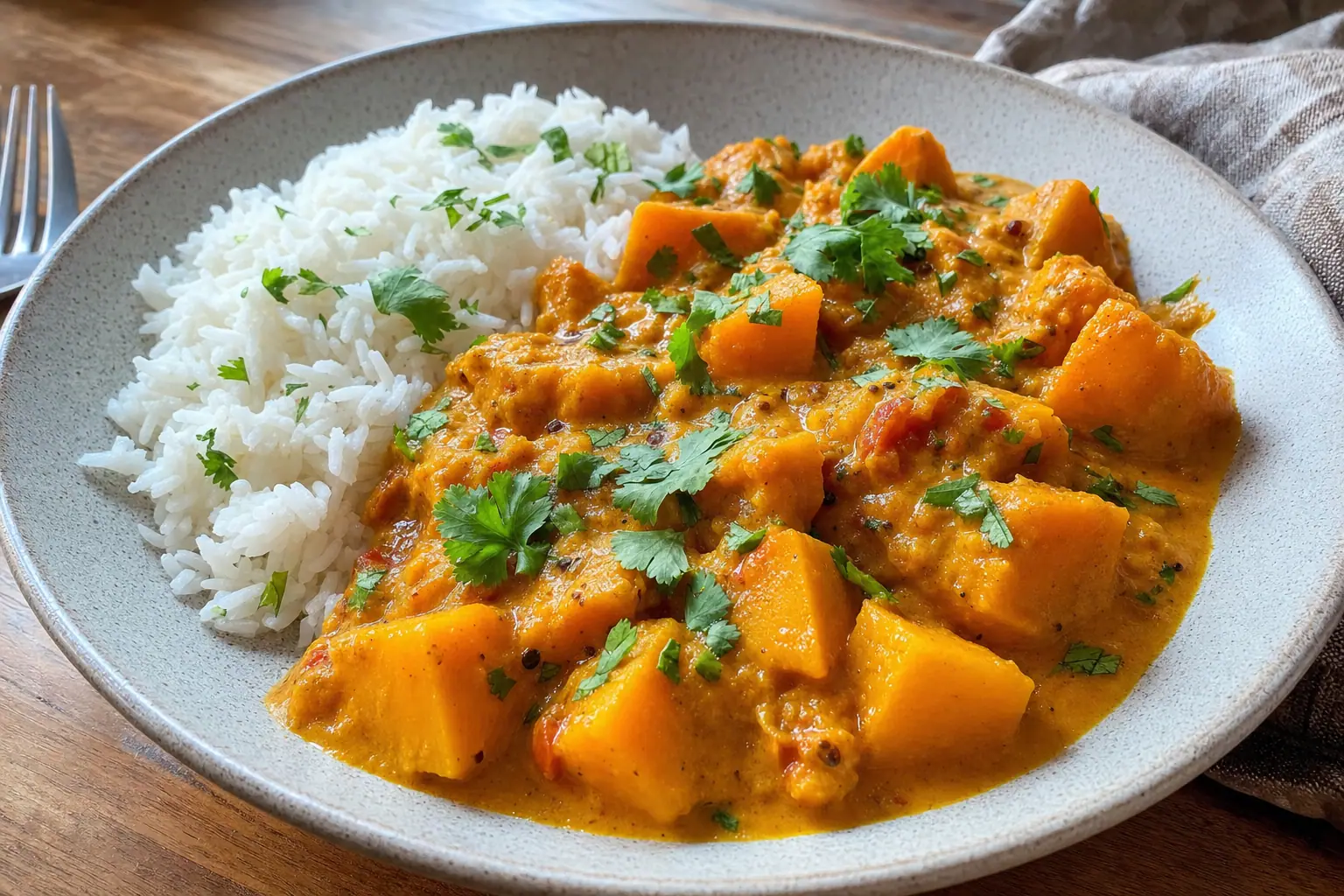
Butternut Squash Curry
This cozy butternut squash curry simmered with coconut milk, chickpeas, tomatoes, and spinach is creamy without being heavy. It is weeknight-friendly, fully vegan, and good with rice, naan, or a spoon straight from the锅.
 Vegan Recipes
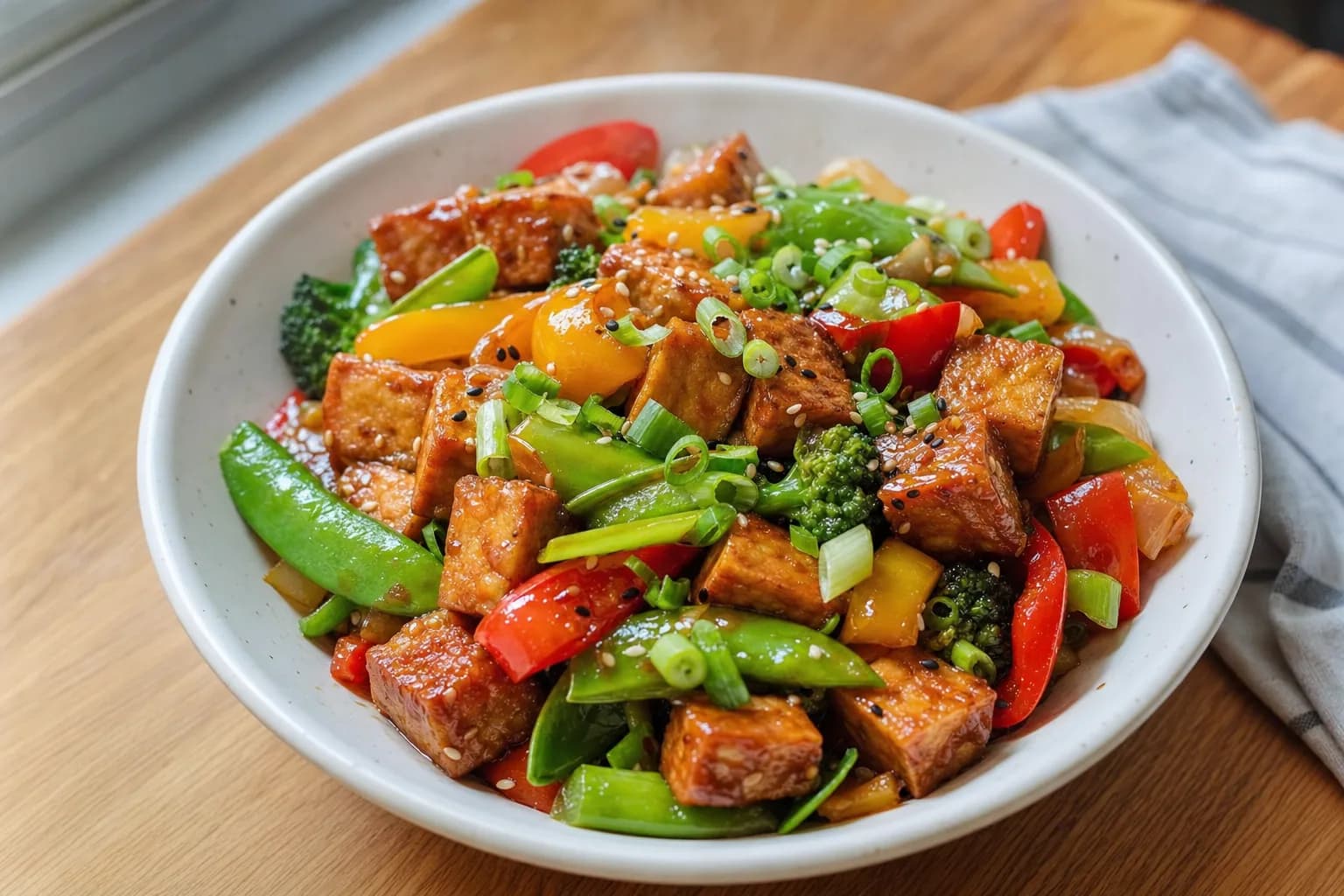
Tofu Stir Fry
This colorful tofu stir fry is a weeknight-friendly pan dinner with crisp-edged tofu, tender vegetables, and a glossy soy-ginger sauce. Serve it over brown rice for a complete vegan meal that feels fresh and satisfying.