
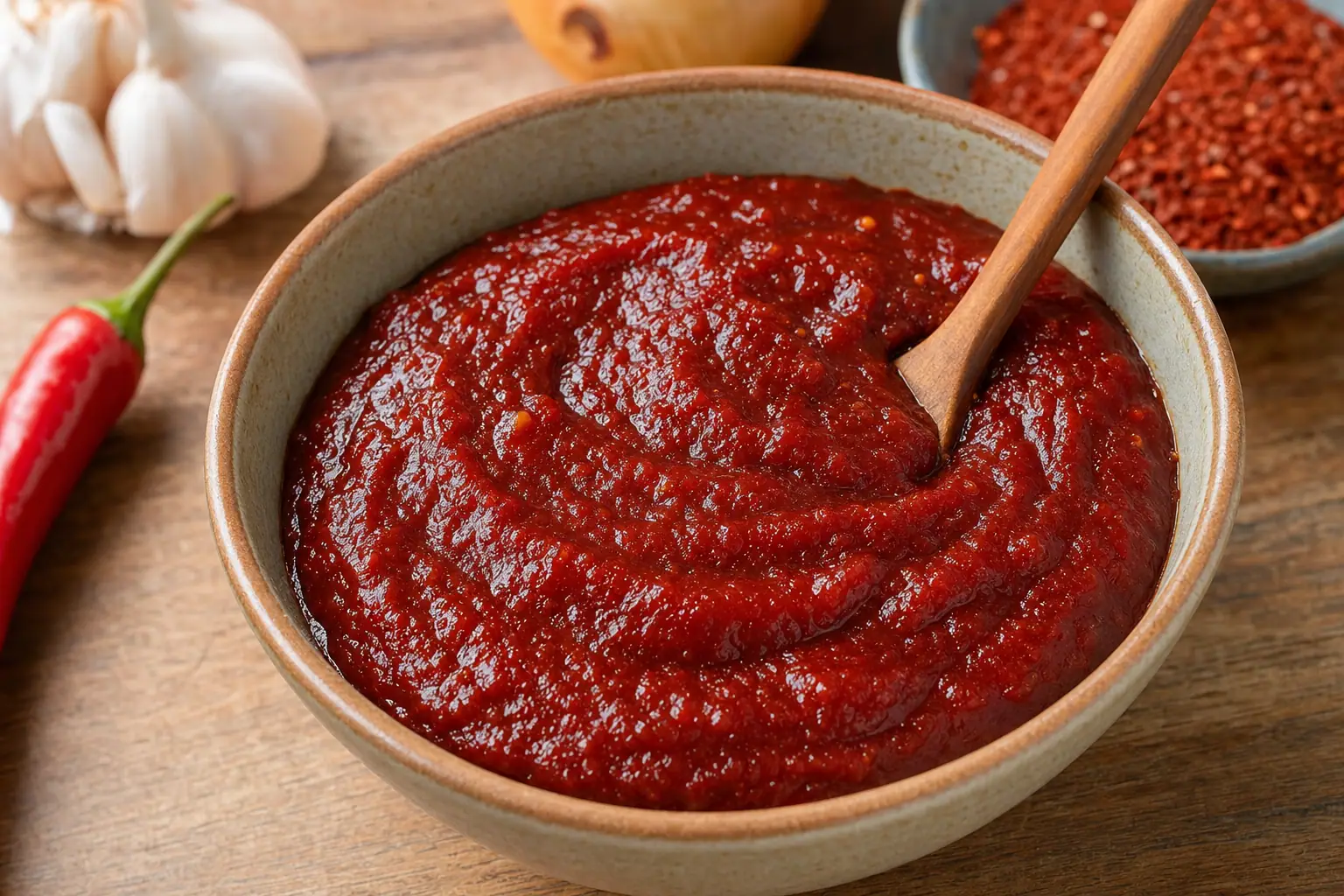
Quick Homemade Gochujang-Style Paste
This shortcut gochujang-style paste brings together miso, gochugaru, maple syrup, garlic, and vinegar for a spicy-sweet Korean-inspired condiment you can make in minutes. It is not traditionally fermented, but it is very
- Total time
- 15 min
- Yield
- 32 tablespoons, about 2 cups
- Difficulty
- Easy
Prep 10mCook 5mKoreanVegan Recipes
Gochujang is a Korean red chile paste known for its heat, gentle sweetness, and deep savory flavor. Traditional gochujang is fermented and often made with ingredients like meju powder and malted grain, then aged for weeks or months.
This home version is a quick gochujang-style paste. White miso supplies the fermented soybean flavor, gochugaru brings the chile heat, and maple syrup gives it the sticky sweetness many cooks expect from gochujang.
Use it anywhere you want a bold spoonful of flavor: stir it into marinades, whisk it into sauces, dab it on rice bowls, or loosen it with a little water for noodles.
01What you'll need
Ingredients
8 items · 32 tablespoons, about 2 cups
- 1 cup (272 g) white or yellow miso
- 1/2 cup (45 g) gochugaru, Korean red pepper flakes
- 1/3 cup (107 g) pure maple syrup
- 2 tablespoons rice vinegar
- 2 tablespoons toasted sesame oil
- 2 tablespoons soy sauce
- 2 garlic cloves, finely grated
- 2 to 4 tablespoons warm water, as needed
02How to make it
Step-by-step
1. Measure the ingredients
Set out the miso, gochugaru, maple syrup, rice vinegar, sesame oil, soy sauce, garlic, and warm water. Gochugaru is Korean dried red pepper. It has a fruity heat and is different from American chili powder, which often contains cumin and other spices.
2. Warm the liquids
Add the maple syrup, rice vinegar, sesame oil, soy sauce, grated garlic, and 2 tablespoons warm water to a small saucepan. Warm over low heat for 1 to 2 minutes, stirring often, just until the mixture is loose and steamy. Do not boil it.
3. Bloom the chile flakes
Remove the pan from the heat. Stir in the gochugaru until the flakes are fully moistened. Let the mixture sit for 2 minutes. This softens the chile flakes and helps their flavor spread through the paste.
4. Stir in the miso
Add the miso and whisk or stir until smooth and thick. Scrape the bottom and sides of the pan so there are no dry pockets of chile or miso.
5. Adjust the texture
If the paste is thicker than you like, stir in more warm water 1 tablespoon at a time. For a spoonable condiment, keep it thick. For a sauce base that is easier to drizzle, make it slightly looser.
6. Cool the paste
Let the paste cool to room temperature. Taste it once cool, then adjust if needed. Add a splash more vinegar for brightness, a little maple syrup for sweetness, or a pinch more gochugaru for heat.
7. Jar and chill
Spoon the paste into a clean jar with a tight lid. Refrigerate for at least 30 minutes before using if you have time. The flavor becomes rounder after it rests.
03From our kitchen
Cook's tips
- Make-ahead: This paste is a good make-ahead condiment. It tastes fuller after one night in the refrigerator.
- Storage: Keep it in a clean, covered jar in the refrigerator for up to 3 weeks. Use a clean spoon each time so the paste stays fresh.
- Freezing: Freeze in 1-tablespoon portions in an ice cube tray, then move the cubes to a freezer bag. Freeze for up to 3 months.
- Gluten-free swap: Use gluten-free miso and tamari instead of soy sauce. Also check that your gochugaru is pure chile with no added wheat-based ingredients.
- Sweetener swap: Rice syrup gives a flavor closer to many Korean pantry pastes. Maple syrup is easy to find and works well. Honey also works, but the recipe will no longer be vegan.
- Heat control: Gochugaru can range from mild to hot. Start with a mild or medium gochugaru if you are sensitive to spice. Avoid substituting a full 1/2 cup of cayenne, which would be much hotter.
Cook's note
This is a quick gochujang-style paste, not a traditional fermented gochujang. It is designed for home cooks who want a useful, weeknight-friendly condiment without a long fermentation process.
04Frequently asked
Questions & answers
Is this the same as traditional gochujang?
No. Traditional gochujang is fermented and usually made with Korean fermented soybean powder, grain, salt, and chile, then aged. This version uses miso for fermented flavor and is ready the same day.
How spicy is this paste?
It is usually medium-spicy, but the heat depends on your gochugaru. If your chile flakes are very hot, use 1/3 cup at first, then add more to taste.
Can I use regular chili powder instead of gochugaru?
It is not recommended. Many regular chili powders include cumin, oregano, garlic powder, and other spices, which will change the flavor. If you cannot find gochugaru, use a smaller amount of Aleppo pepper or a mix of mild paprika and a pinch of cayenne.
How do I use homemade gochujang-style paste?
Whisk it into marinades, soups, stir-fry sauces, noodle sauces, salad dressings, or mayo. Start with 1 teaspoon to 1 tablespoon, then add more to taste.
Why did my paste get thicker in the refrigerator?
Gochugaru continues to absorb moisture as it sits. Stir in warm water, 1 teaspoon at a time, until the paste loosens to the texture you want.
05Per serving
Nutrition facts
Nutrition Facts
32 tablespoons, about 2 cups
Amount per serving
% Daily Value*
- Total Fat2 g
- 3%
- Saturated Fat0 g
- 0%
- Cholesterol0 mg
- 0%
- Sodium369 mg
- 16%
- Total Carbohydrate5 g
- 2%
- Dietary Fiber1 g
- 4%
- Total Sugars3 g
- Protein1 g
- 2%
- Vitamin D0 mcg
- 0%
- Calcium11 mg
- 1%
- Iron0.3 mg
- 2%
- Potassium58 mg
- 1%
* Percent Daily Values are based on a 2,000-calorie diet.
05Keep cooking
You might also like
 Vegan Recipes
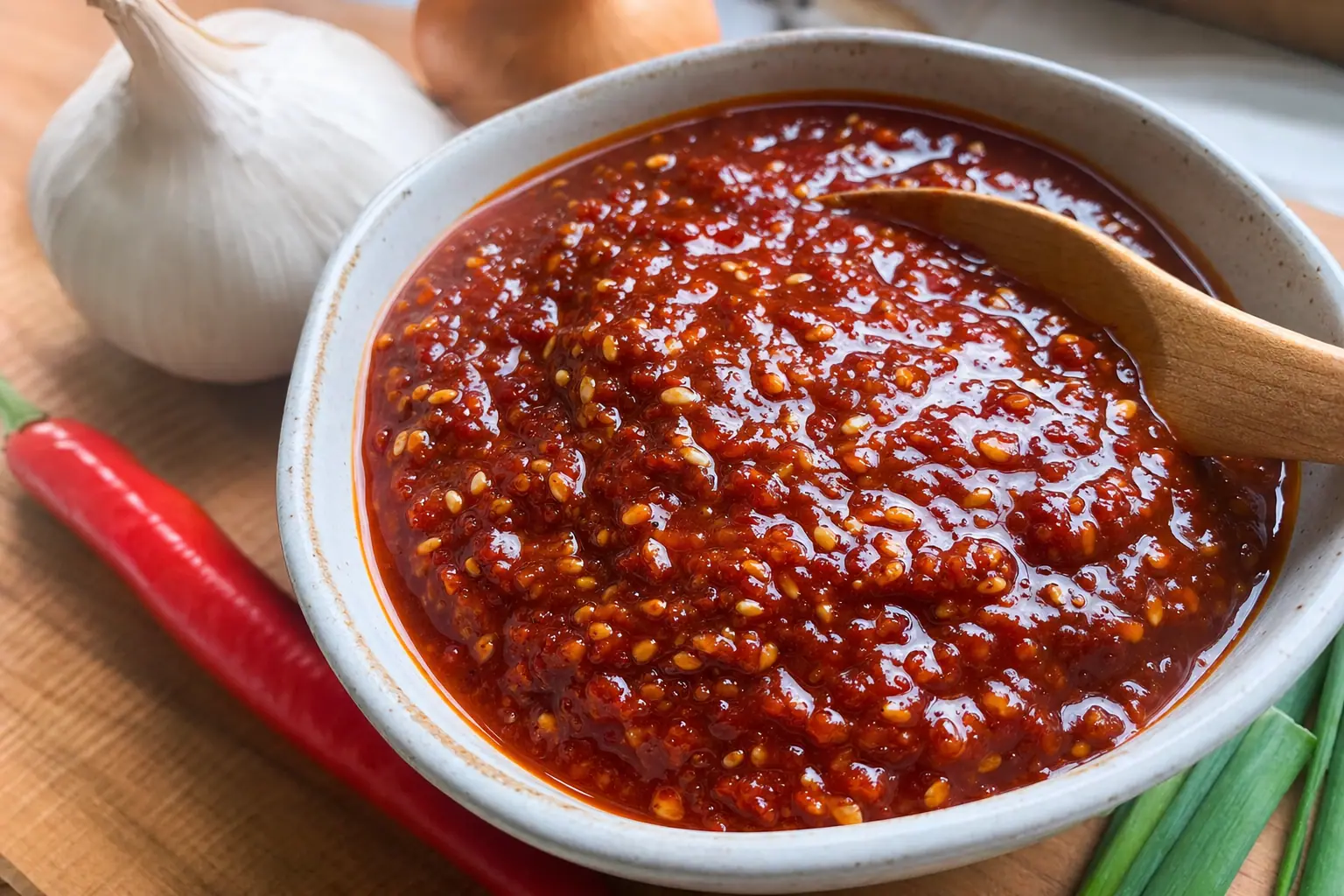
Korean BBQ Sauce
This glossy Korean-style BBQ sauce is sweet, savory, garlicky, and a little spicy. Brush it on grilled meats, spoon it over rice bowls, or use it as a quick marinade when dinner needs more flavor.
 Vegan Recipes
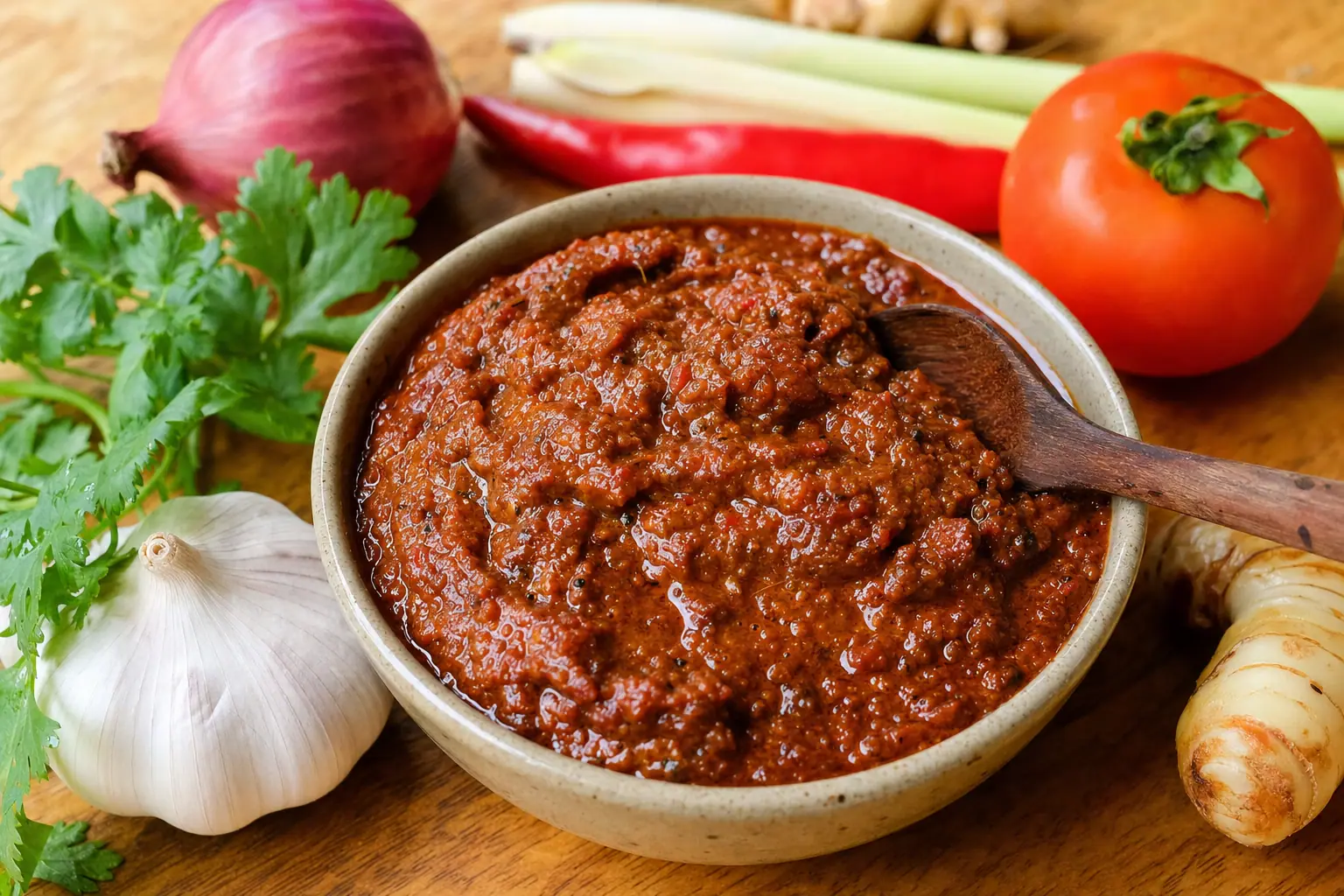
Massaman Curry Paste
This homemade massaman curry paste is warm, fragrant, and gently spicy, with toasted spices, dried chiles, lemongrass, garlic, and shallots. It is vegan as written, so you can use it in vegetable, tofu, chickpea, or meat
 Vegan Recipes
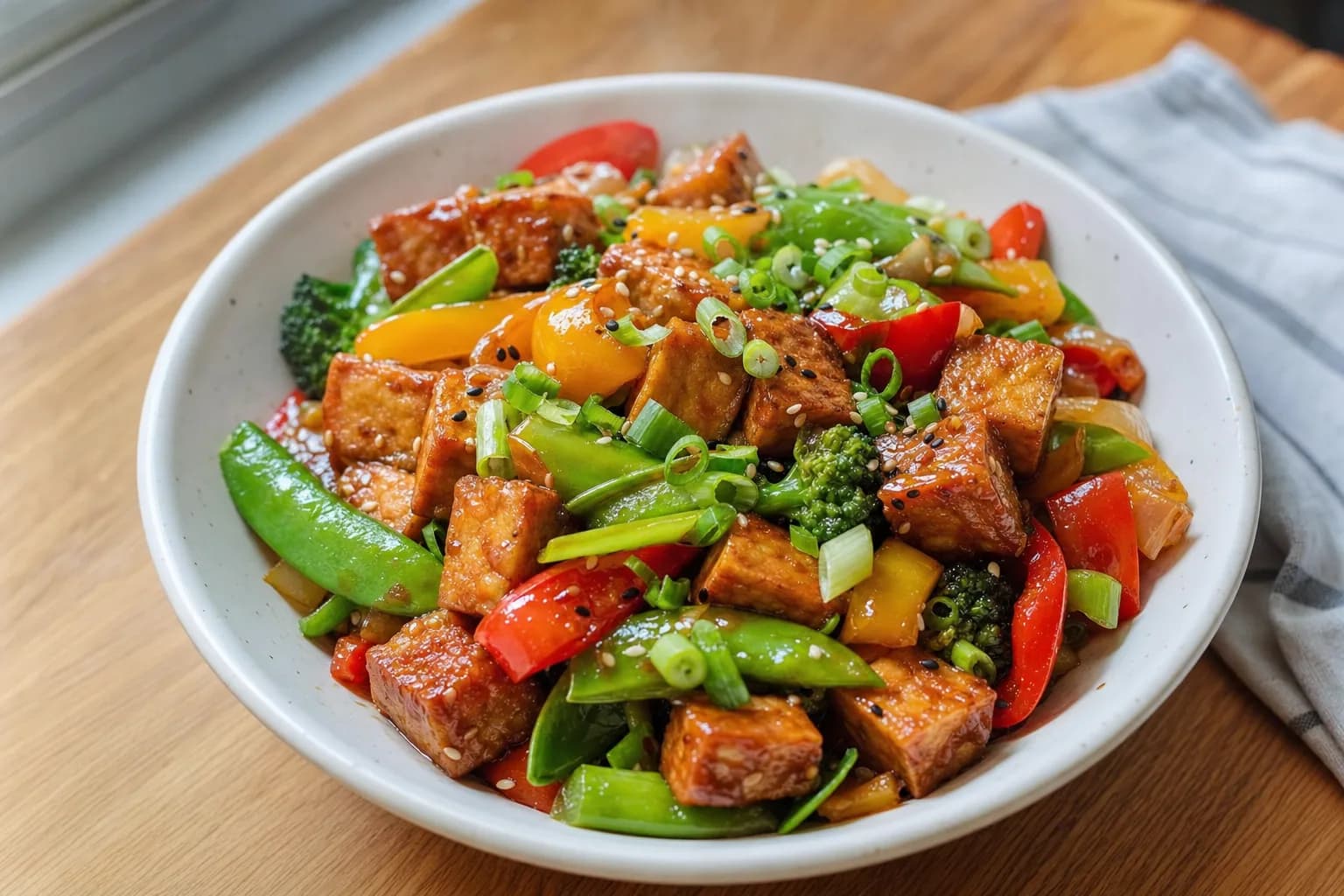
Tofu Stir Fry
This colorful tofu stir fry is a weeknight-friendly pan dinner with crisp-edged tofu, tender vegetables, and a glossy soy-ginger sauce. Serve it over brown rice for a complete vegan meal that feels fresh and satisfying.
 Vegan Recipes
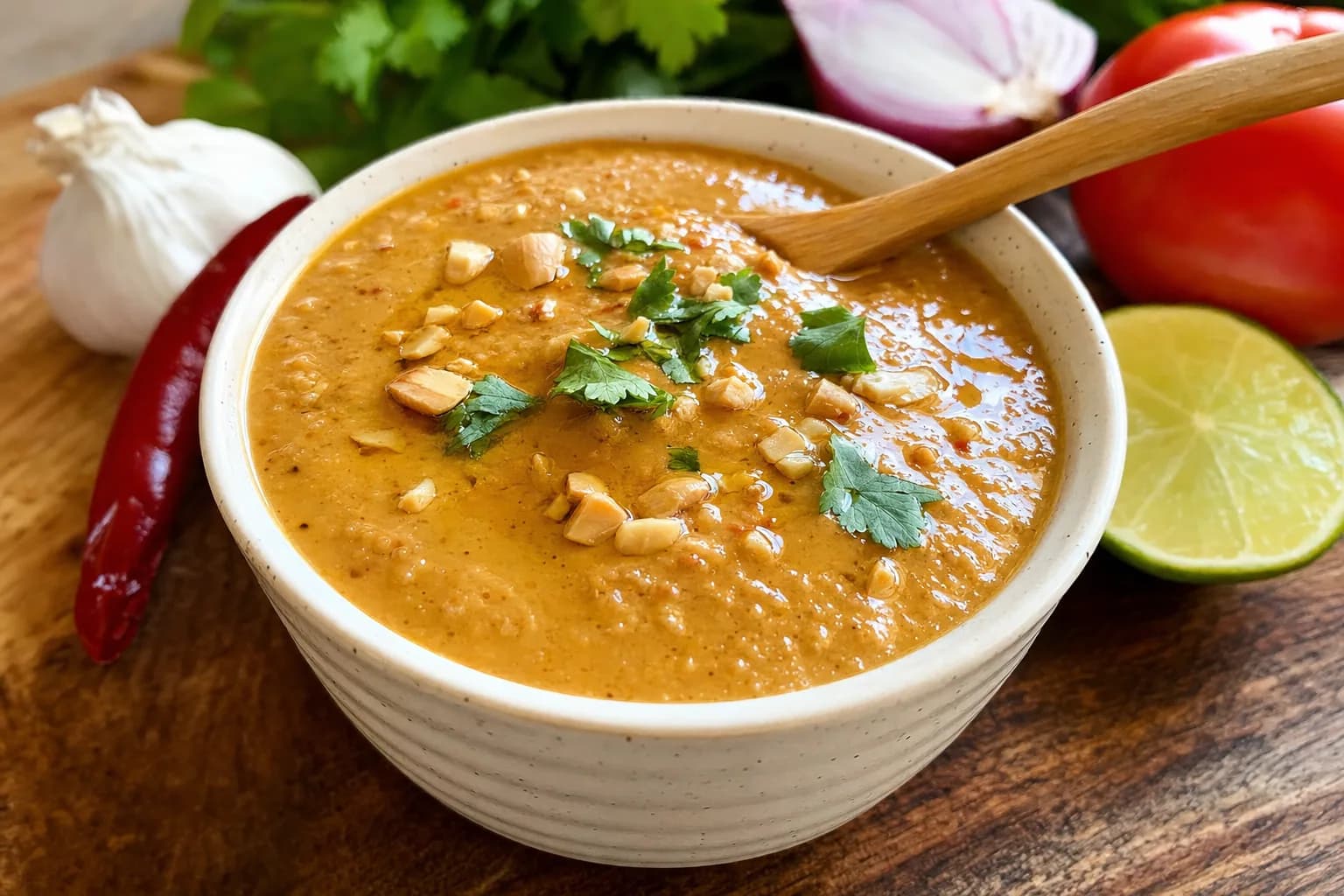
Satay Sauce
This creamy satay sauce is rich with peanuts, coconut milk, lime, ginger, and a little curry paste. Spoon it over grilled skewers, noodles, rice bowls, roasted vegetables, or use it as a dip for crisp cucumber and spring