
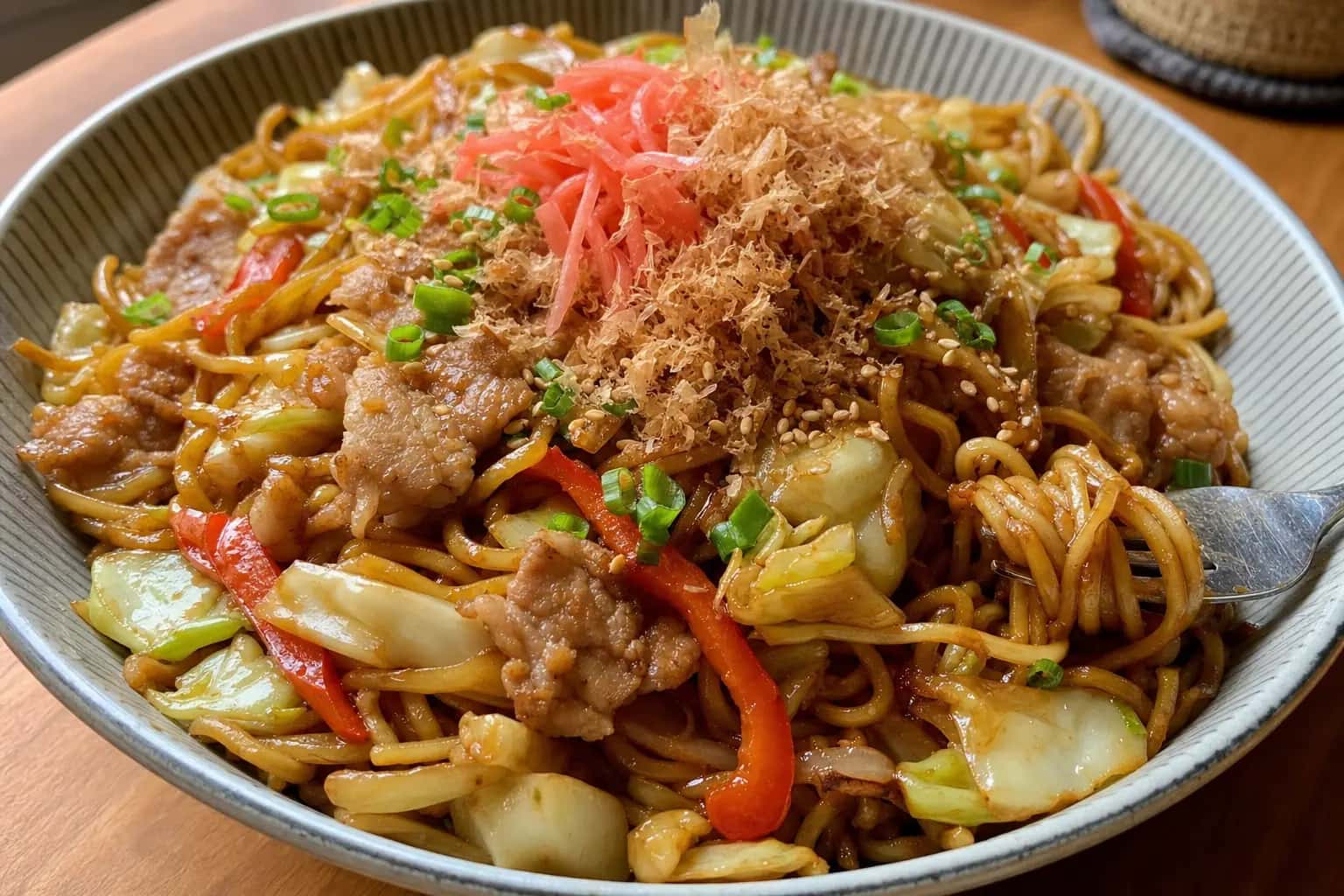
Yakisoba
Yakisoba is a Japanese stir-fried noodle dish with tender pork, crisp vegetables, and a tangy-sweet sauce. It cooks fast, so have everything sliced and ready before the pan gets hot.
- Total time
- 35 min
- Yield
- 4 servings
- Difficulty
- Easy
Prep 20mCook 15mJapanesePasta Recipes
Yakisoba means “fried noodles” in Japanese, even though the noodles are made with wheat rather than buckwheat soba. You will often see it at festivals, casual restaurants, and weeknight tables because it is quick, flexible, and deeply savory.
The key is to stir-fry in stages. This keeps the pork tender, the vegetables bright, and the noodles from turning mushy. A simple homemade sauce gives the dish its familiar sweet, salty, tangy flavor.
Use fresh steamed yakisoba noodles if you can find them. They are usually sold in the refrigerated section, often with seasoning packets. For this recipe, discard the packets and use the sauce below.
01What you'll need
Ingredients
17 items · 4 servings
- 3 tablespoons Worcestershire sauce
- 2 tablespoons oyster sauce
- 2 tablespoons ketchup
- 1 tablespoon reduced-sodium soy sauce
- 1 tablespoon mirin
- 1 teaspoon granulated sugar
- 1 teaspoon toasted sesame oil
- 12 ounces fresh steamed yakisoba noodles, seasoning packets discarded
- 8 ounces boneless pork loin or pork tenderloin, thinly sliced
- 1 tablespoon neutral oil, such as canola or vegetable oil
- 1/2 medium yellow onion, thinly sliced
- 1 medium carrot, cut into thin matchsticks
- 3 cups thinly sliced green cabbage
- 1 red bell pepper, thinly sliced
- 2 scallions, cut into 1-inch pieces
- 1 cup bean sprouts
- Freshly ground black pepper, to taste
02How to make it
Step-by-step
1. Mix the sauce
In a small bowl, stir together the Worcestershire sauce, oyster sauce, ketchup, soy sauce, mirin, sugar, and sesame oil until the sugar dissolves. Set the sauce near the stove so it is ready when the noodles go in.
2. Loosen the noodles
Place the yakisoba noodles in a colander and rinse briefly under warm water, using your fingers to gently separate the strands. Drain well. Do not soak them, or they can become too soft.
3. Prepare the pan
Heat a large skillet, wok, or wide sauté pan over medium-high heat. Add the neutral oil and swirl to coat the bottom. The pan should be hot enough that the pork sizzles when it touches the surface.
4. Cook the pork
Add the sliced pork in a single layer as much as possible. Cook for 2 to 3 minutes, stirring once or twice, until the pork is no longer pink on the outside. It will finish cooking with the vegetables.
5. Stir-fry the firm vegetables
Add the onion and carrot. Stir-fry for 2 minutes, which means to cook quickly while stirring often. Add the cabbage and bell pepper and cook for 3 to 4 minutes more, until the cabbage starts to wilt but still has some bite.
6. Add the noodles
Add the drained noodles to the pan. Toss with tongs or two spatulas to combine them with the pork and vegetables. Cook for 1 to 2 minutes, letting the noodles heat through.
7. Sauce and finish
Pour the sauce over the noodles. Toss well so the sauce coats everything evenly. Add the scallions and bean sprouts, then cook for 1 to 2 minutes more, until glossy and hot. Season with black pepper to taste.
8. Serve right away
Divide the yakisoba among bowls or plates while it is hot. If you like, serve with common yakisoba toppings such as pickled ginger or aonori seaweed, but the noodles are ready to eat as they are.
03From our kitchen
Cook's tips
- Make-ahead: Slice the pork and vegetables up to 1 day ahead. Mix the sauce up to 3 days ahead and refrigerate it in a covered jar or container.
- Storage: Refrigerate leftovers in an airtight container for up to 3 days. Reheat in a skillet over medium heat with a splash of water to loosen the noodles.
- Noodle swap: If you cannot find fresh yakisoba noodles, use fresh chow mein noodles or cooked ramen noodles. Avoid overcooking dried noodles; rinse and drain them well before stir-frying.
- Protein swap: Thinly sliced chicken thighs, shrimp, tofu, or extra vegetables can replace the pork. If using tofu, press it dry first so it browns instead of steaming.
- Vegetable swap: Cabbage is classic, but you can add mushrooms, snow peas, broccoli slaw, or zucchini. Keep the total amount similar so the pan does not get crowded.
- Avoid soggy yakisoba: Drain the noodles well and use a large pan. If the pan is too full, the vegetables steam and release extra water.
Cook's note
Fresh yakisoba noodles vary by brand. Some are lightly oiled and some are quite compact. A quick warm rinse helps separate them, but keep it brief so the noodles stay springy in the stir-fry.
04Frequently asked
Questions & answers
Is yakisoba made with soba noodles?
Usually, no. Despite the name, yakisoba is typically made with wheat noodles, not buckwheat soba. Fresh steamed yakisoba noodles are springy and made for stir-frying.
Can I make yakisoba without oyster sauce?
Yes. For a substitute, use 1 extra tablespoon soy sauce plus 1 tablespoon hoisin sauce. The flavor will be a little different, but still savory and slightly sweet.
Can I make this vegetarian?
Yes. Replace the pork with firm tofu or mushrooms, and use vegetarian oyster sauce, often made from mushrooms. Check the Worcestershire sauce too, because some brands contain anchovies.
Why are my noodles sticking together?
They may not have been loosened enough before cooking, or the pan may be too dry. Rinse fresh noodles briefly under warm water, drain well, and toss them gently in the pan with the vegetables before adding sauce.
Can I double this recipe?
Yes, but cook it in two batches. A crowded pan traps steam, which can make the noodles wet and the vegetables limp.
05Per serving
Nutrition facts
Nutrition Facts
4 servings
Amount per serving
% Daily Value*
- Total Fat10 g
- 13%
- Saturated Fat2 g
- 10%
- Cholesterol37 mg
- 12%
- Sodium796 mg
- 35%
- Total Carbohydrate46 g
- 17%
- Dietary Fiber5 g
- 18%
- Total Sugars12 g
- Protein19 g
- 38%
- Vitamin D0 mcg
- 0%
- Calcium56 mg
- 4%
- Iron2.3 mg
- 13%
- Potassium620 mg
- 13%
* Percent Daily Values are based on a 2,000-calorie diet.
05Keep cooking
You might also like
 Pasta Recipes
Classic Meat Sauce
This cozy meat sauce is rich with ground beef, tomatoes, garlic, and a small splash of milk for a mellow finish. Simmer it slowly, then spoon it over pasta, polenta, baked potatoes, or roasted vegetables.
 Pasta Recipes
Pasta Puttanesca
Pasta puttanesca is a bold pantry dinner with tomatoes, olives, capers, garlic, and anchovies. It comes together fast, tastes deeply savory, and needs very little chopping.
 Pasta Recipes
Peanut Sauce Noodles with Crunchy Vegetables
These peanut sauce noodles are creamy, savory, and flexible enough for a quick weeknight dinner or a make-ahead lunch. A simple peanut dressing coats warm noodles, crisp vegetables, and chopped peanuts for crunch.
 Pasta Recipes
Garlic Noodles
These glossy garlic noodles are quick, savory, and full of buttery garlic flavor. A short list of pantry sauces turns plain spaghetti into a flexible weeknight pasta that works as a main dish or a side.