
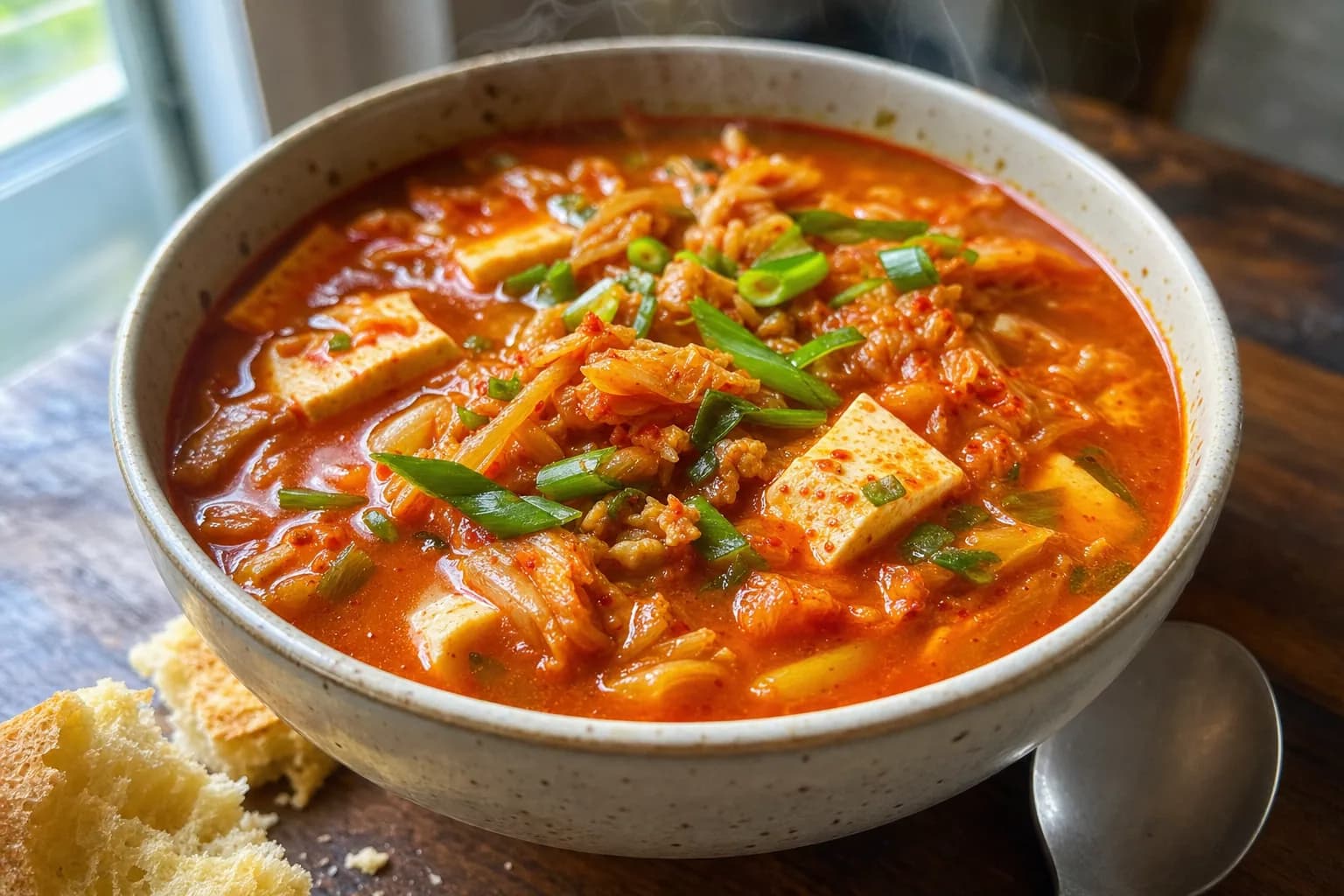
Kimchi Soup
This warming kimchi soup is tangy, savory, and gently spicy, with tofu, pork, and plenty of fermented cabbage in a rich broth. It is a weeknight-friendly take on Korean kimchi jjigae, made with simple steps and flexible,
Total
45 min
Servings
4 servings
Level
Easy
Kimchi soup is the kind of meal that makes a quiet pot of pantry ingredients taste deep and lively. The key is using well-fermented kimchi, which brings sourness, heat, and a lot of flavor before you add much else.
In Korea, this style of soup is often called kimchi jjigae. It is usually served bubbling hot with rice, and it can include pork, tofu, tuna, or just vegetables. This version uses pork shoulder or belly for richness, plus tofu to make it filling.
Do not worry if your kimchi is very sour. That is exactly what you want here. A short simmer mellows the sharp edges and turns the broth into something cozy and bold.
01What you'll need
Ingredients
14 items · 4 servings
- 1 tablespoon neutral oil, such as canola or vegetable oil
- 6 ounces pork belly, pork shoulder, or bacon, cut into bite-size pieces
- 1 small yellow onion, thinly sliced
- 2 garlic cloves, minced
- 2 cups well-fermented kimchi, roughly chopped, plus 1/2 cup kimchi juice if available
- 1 tablespoon gochugaru, Korean red pepper flakes, plus more to taste
- 1 tablespoon gochujang, Korean red pepper paste
- 1 teaspoon sugar
- 4 cups water, low-sodium chicken broth, or anchovy-kelp stock
- 1 tablespoon soy sauce, plus more to taste
- 8 ounces firm or medium-firm tofu, drained and cut into large cubes
- 2 scallions, sliced
- 1 teaspoon toasted sesame oil
- Cooked short-grain rice, for serving
02How to make it
Step-by-step
1. Prepare the ingredients
Chop the kimchi into bite-size pieces and save any liquid from the jar. Slice the pork, onion, scallions, and tofu before you turn on the stove. This makes the cooking feel calm and quick.
2. Brown the pork
Heat the oil in a medium pot or Dutch oven over medium heat. Add the pork and cook for 4 to 5 minutes, stirring now and then, until some fat renders and the edges begin to brown. If using bacon, cook it until it is lightly crisp.
3. Soften the aromatics
Add the onion and garlic. Cook for 2 to 3 minutes, stirring often, until the onion starts to soften and the garlic smells fragrant. Keep the heat at medium so the garlic does not burn.
4. Cook the kimchi
Add the chopped kimchi, kimchi juice, gochugaru, gochujang, and sugar. Stir well, then cook for 4 to 5 minutes. This step lightly fries the kimchi, which rounds out its sour flavor and makes the soup taste fuller.
5. Add the broth
Pour in the water, broth, or anchovy-kelp stock. Add the soy sauce and stir to loosen any browned bits from the bottom of the pot. Bring the soup to a boil, then reduce the heat so it simmers. A simmer means small bubbles gently break the surface.
6. Simmer the soup
Let the soup simmer uncovered for 15 to 20 minutes, until the kimchi is tender and the broth tastes rich. Taste and add a little more soy sauce if it needs salt, or more gochugaru if you want extra heat.
7. Add the tofu
Gently slide the tofu cubes into the pot. Simmer for 3 to 5 minutes, just until the tofu is hot. Try not to stir too hard, because tofu can break apart.
8. Finish and serve
Turn off the heat and stir in the sesame oil. Sprinkle with sliced scallions. Serve hot with bowls of cooked rice, spooning the soup over the rice as you eat.
03From our kitchen
Cook's tips
- Make-ahead: Kimchi soup tastes even deeper the next day. Make the soup through the simmering step, cool it, and refrigerate. Add the tofu when reheating so it stays tender.
- Storage: Refrigerate leftovers in an airtight container for up to 4 days. Reheat gently on the stove or in the microwave until steaming hot.
- Freezing: The broth and kimchi freeze well for up to 2 months, but tofu can become spongy after freezing. For the nicest texture, freeze the soup without tofu and add fresh tofu later.
- Pork swaps: Use sliced pork shoulder, pork belly, bacon, canned tuna, or cooked chicken. For a meat-free version, skip the pork and use a little extra oil, mushrooms, and vegetable broth.
- Stock choices: Anchovy-kelp stock gives the most classic flavor, but water or low-sodium chicken broth works well. If using store-bought broth, taste before adding extra soy sauce.
- Kimchi age: Older, sour kimchi is ideal. If your kimchi is very fresh, add 1 to 2 teaspoons rice vinegar at the end to mimic some of that tangy flavor.
Cook's note
Gochugaru and gochujang are both made with Korean red pepper, but they are not the same. Gochugaru is a coarse flake that adds clean heat and color. Gochujang is a thick fermented paste that adds heat, salt, and a little sweetness. Many supermarkets carry both in the international aisle, and Korean markets will have several options.
04Frequently asked
Questions & answers
Can I make kimchi soup vegetarian?
Yes. Leave out the pork and use vegetable broth or kombu stock. Add sliced shiitake mushrooms, zucchini, or extra tofu for body. Check that your kimchi is vegetarian, because many kinds contain fish sauce or shrimp paste.
What kind of kimchi is best for soup?
Napa cabbage kimchi is the usual choice. The best kimchi for soup is well-fermented and sour, not newly made. If it smells tangy and tastes sharp, it will make a more flavorful broth.
Is kimchi soup very spicy?
It can be, but you control the heat. Start with 1 to 2 teaspoons gochugaru instead of a full tablespoon if you prefer mild food. You can also use less gochujang and add more later after tasting.
Can I use water instead of stock?
Yes. Kimchi, pork, gochujang, and soy sauce bring a lot of flavor, so water is fine. Stock gives a rounder taste, but it is not required.
Why does my soup taste too sour?
Very aged kimchi can make a sharp soup. Add a pinch more sugar, a splash of broth, or a few extra cubes of tofu to soften the flavor. Serving it with plain rice also balances the sourness.
05Keep cooking
You might also like
 Dinner
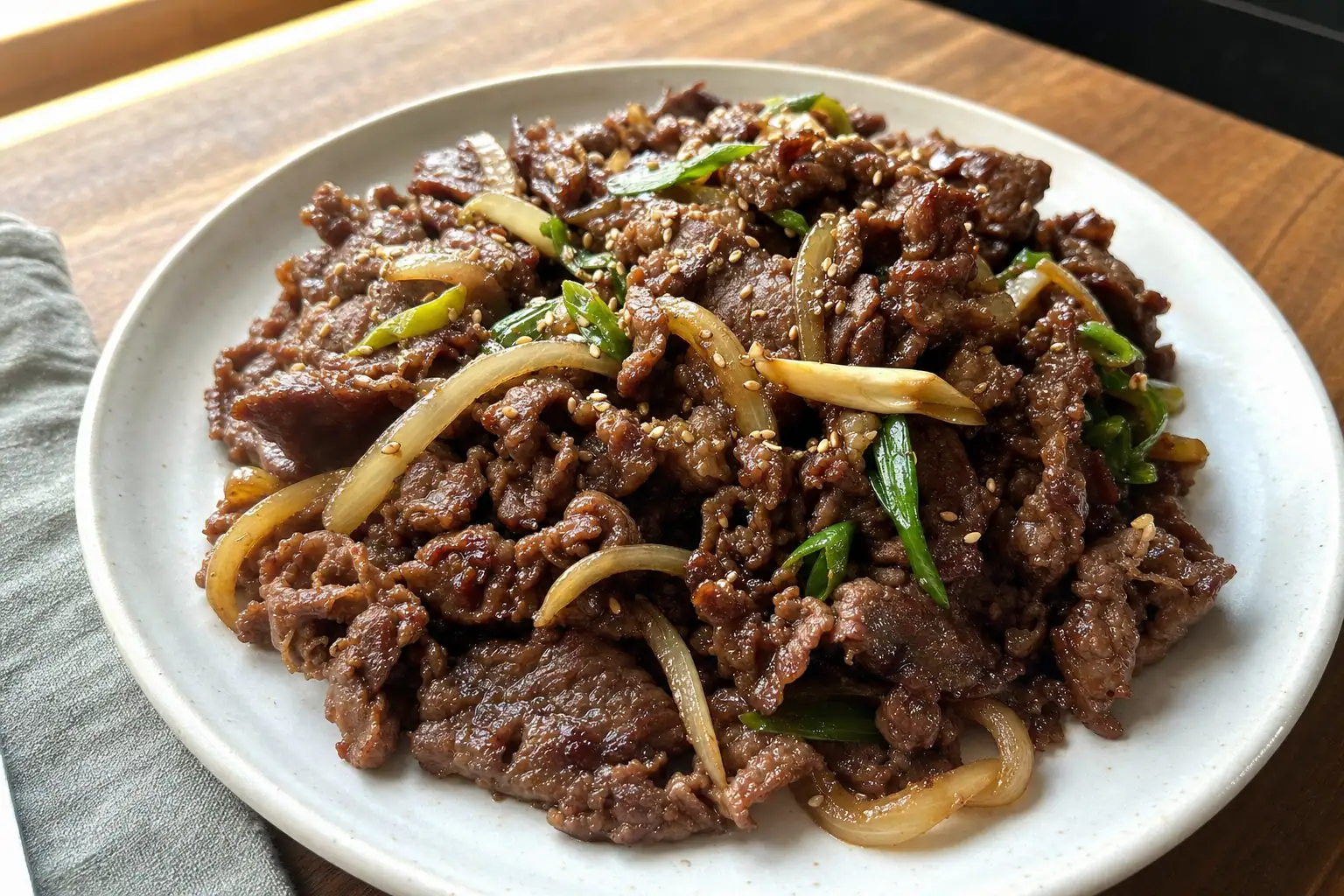
Bulgogi
Bulgogi is Korean marinated beef cooked quickly until tender, savory, and lightly caramelized. Serve it with rice, lettuce leaves, kimchi, and a few simple sides for an easy dinner with big flavor.
 Dinner
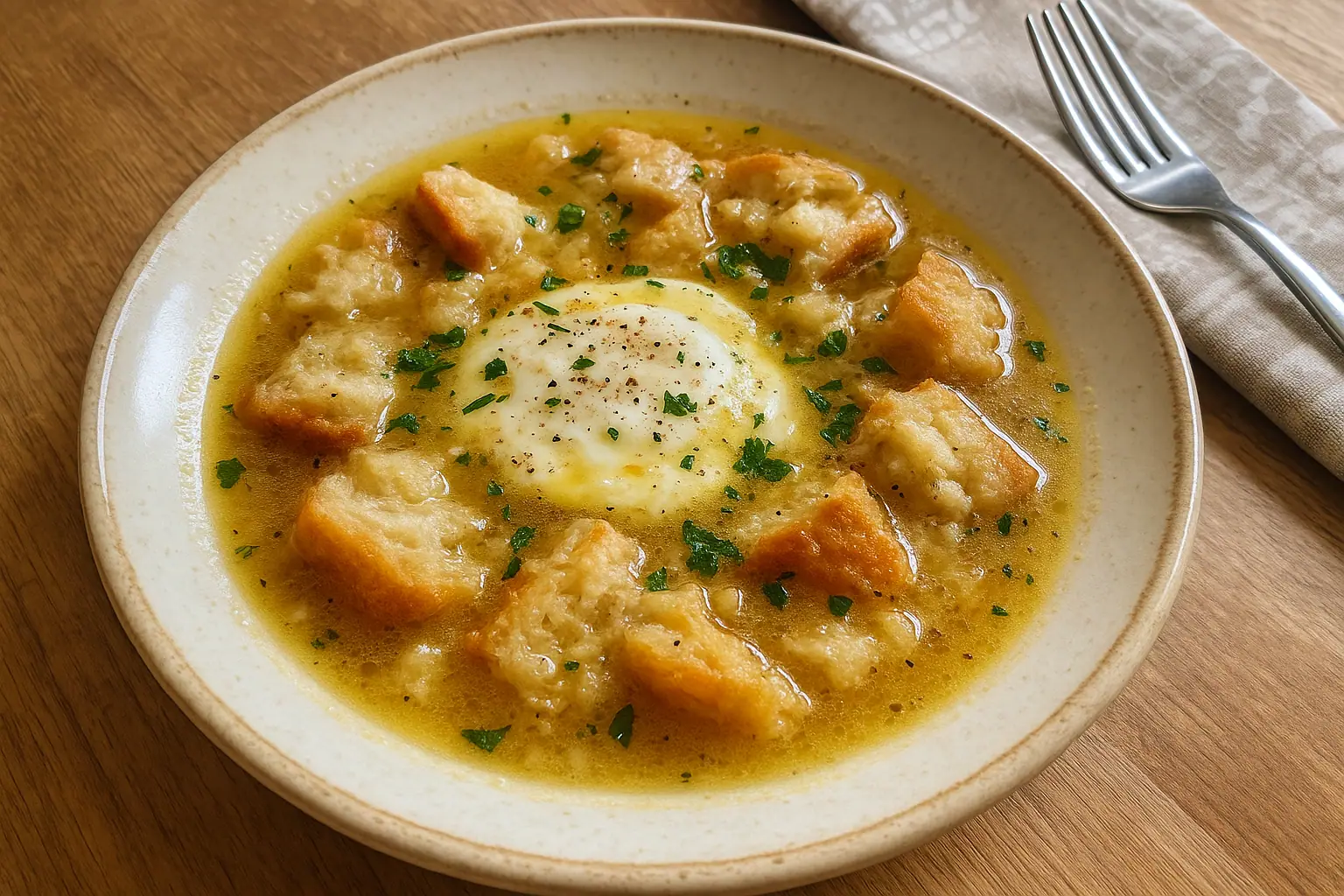
Comforting Garlic Soup
Warm up with this gentle but flavorful garlic soup that's perfect for cozy evenings.
 Dinner
Creamy Polenta
Whip up this comforting and versatile dish in no time with just a few simple ingredients.
 Dinner
Perfectly Baked Potato
Master the art of making a classic baked potato with this simple guide.